Showing posts with label John's Posts. Show all posts

Sunday, April 19, 2020

Ten books that have influenced me the most

Someone asked me the other day which books have influenced me the most, and I thought for old times' sake I would write a blog post with a list.

Keep in mind that these are not necessarily the best books I've read; some of them happened to be in the right place at the right time of my life. I have restricted myself to theology books; there are fiction books that have also influenced me profoundly, but that influence is usually subtler.

I have arranged the books in order of author. Five of these books are written by Americans; the other authors include one Australian, one Canadian, one Dutchman, one Englishman, and one Scot. Three of these books are available as pdf downloads: I have put a link in their titles.

Robert Alter, The Art of Biblical Narrative (Basic Books, 1981)

Interestingly, the first book on this list is by a (non-Christian) Jew, and so "biblical" here means "Old Testament". Alter fundamentally misunderstands the Old Testament since he doesn't read it in the light of Jesus. And yet he has helped and encouraged me to read the text closely, discerning the importance of details, and asking why one word is used rather than another.

D. A. Carson, A Call To Spiritual Reformation: Priorities from Paul and His Prayers (Inter-Varsity Press, 1992)

This book, first published in 1992, was reissued in 2015 under the much better title, Praying with Paul: A Call To Spiritual Reformation. The book is actually an exposition of the prayers in Paul's epistles. This book transformed my prayer life (though not as thoroughly as I might wish) by challenging me regarding the things I pray for, and helping me to pray through passages of the Bible.

G. K. Chesterton, Orthodoxy (John Lane, 1908)

This is a whimsical account of how Chesterton became a Christian: "I am the man who with the utmost daring discovered what had been discovered before.... I did try to found a heresy of my own; and when I had put the last touches to it, I discovered that it was orthodoxy." This book gave me a vision of how grand orthodox Christian theology is: "There never was anything so perilous or so exciting as orthodoxy. It was sanity: and to be sane is more dramatic than to be mad."

Graeme Goldsworthy, Gospel and Kingdom (Paternoster Press, 1994)

There are many good books on how to read and understand the Old Testament, but this was the book that most clearly showed me how to read OT stories in the light of Christ. I had always been convinced of covenant as a unifying OT theme; this book encouraged me to place kingdom as a companion theme alongside it.

Douglas Jones and Douglas Wilson, Angels in the Architecture: A Protestant Vision for Middle Earth (Canon Press, 1998)

This book does for evangelical Protestantism what Chesterton's Orthodoxy does for catholic Christianity: provide a vision of how exciting believing the Bible and following Jesus can be. (In fact, while the authors call their approach "medieval Protestantism", Douglas Wilson has used the label "Chestertonian Calvinism" to describe his beliefs.) Needless to say, I caught the vision, and as a result this book is one of the clearest statements of my worldview, and the sort of things I wish to encourage in my home.

James B. Jordan, Through New Eyes: Developing a Biblical View of the World (Wolgemuth & Hyatt, 1988)

This book helped me to see how the Bible fit together: the connections between different passages, and how certain themes and motifs run right through God's Word. It also helped me to understand the created order in the light of Scripture.
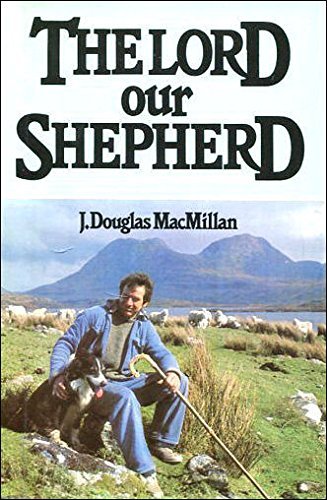
J. Douglas MacMillan, The Lord Our Shepherd (Bryntiron Press, 1983)

This exposition of Psalm 23 was one of the first theological books I read as a teenager, and it showed me how personal and pastoral biblical exposition can be. This is experiential Free Church piety at its warmest.

Vern Poythress, Philosophy, Science, and the Sovereignty of God (Presbyterian and Reformed, 1976)

It was Poythress who guided me from an interest in mathematics to an interest in theology. This book helped me get straight in my mind how everything fits together.

Klaas Schilder, Christ in his Suffering (Eerdmans 1938)

This is the first volume of a trilogy in which Schilder covers every aspect of Christ's Passion. I had the feeling while reading it that I was on holy ground. Schilder often breaks out into prayer and doxology.

R. C. Sproul, Jr., When You Rise Up: A Covenantal Approach to Homeschooling (P&R, 2004)

This was the book that convinced me of the value of homeschooling, and led me to adopt a perspective that sees homeschooling as first and foremost discipleship.

Concluding postscript:

Growing up in a Reformed Christian home, being a Calvinist was never going to be a problem. These books helped me work out the sort of Calvinism I wanted to pursue: a deeply biblical, warm, thoughtful and catholic Calvinism.

Friday, December 01, 2017

Helpful but with some dubious assertions

Jesus on Every Page: 10 Simple Ways to Seek and Find Christ in the Old Testament by David Murray

This book is an accessible summary of the way the Old Testament points to Jesus. Murray notes that there are many connections to draw to Jesus, and attempts to provide a reasonably complete survey of these connections.

Murray is basically correct in his approach. He sees Jesus on every page, though not necessarily, it seems, in every verse. That is, every story can be connected to Jesus even if we have to be careful not to press the analogy in every detail. Murray makes a lot of 1 Peter 1:12 (" It was revealed to them [the prophets] that they were serving not themselves but you, in the things that have now been reported to you") in arguing that the Old Testament prophets knew about the New Testament era that was coming. The Old Testament "things" is the same as the New Testament "reports".

Murray is spot on at many points. For example, he correctly points out, on the basis of Acts 2:30-31, that in Psalm 16 David was a "believing Christian speaking of Christ as his only hope" (p. 194). I also appreciate Murray's alliteration in arranging his subpoints: his chapter on Jesus and Creation has the headings "The Arrangement of Redemption," "The Arena of Redemption," "The Aim of Redemption," "The Accessories of Redemption," "The Assistants of Redemption," "The Advance of Redemption," "The Analogy of Redemption," "The Advantages of Redemption," "The Apex of Redemption," "The Author of Redemption," and "The Application of Redemption".

There are, however, numerous points at which I disagree with Murray, either because he makes a dubious assertion or because he omits a critical point. I will restrict myself to three examples.

Firstly, Murray tends to see Jesus as doing everything in the Old Testament. For example, he argues that "the Son of God is the usual way God appears to humanity" (p. 76). Yet this has the effect of diminishing the work of the Holy Spirit. If we are going to apportion divine deeds among the different members of the Trinity (and that in itself is fraught with peril), then many Old Testament acts must be seen as the work of the Spirit (e.g. Nehemiah 9:20).

Secondly, in looking at Jesus in the prophetic books, Murray omits the idea that Jesus is the one on whom the judgement falls. He talks about Jesus being the judge of the nations (p. 128) but we can also look at judgement the other way: when Nahum 1:2 says "The Lord is a jealous and avenging God; the Lord is avenging and wrathful", we have to remember that this wrath against sin fell on Jesus. This is a glaring omission in what attempts to be a complete catalogue of connections between the Old and New Testaments.

Thirdly, in talking about covenant signs, Murray claims that "the crown on David's head reminded him and all Israel of God's promise of an everlasting king and kingdom" (p. 167). There is, however, no reference to David being crowned until he obtains the crown of the King of Rabbah in 2 Samuel 12:30. David was anointed with oil (2 Samuel 2:4) but the crown is not itself a Davidic symbol. It is used in the Psalms (89:39 and 132:18) to refer to the later monarchy, and perhaps this is where Murray gets the idea.

Thus, Jesus on Every Page is a rather annoying book. It is helpful in many ways, but it could have been so much better. The numerous points of disagreement I had prevent me from recommending it wholeheartedly.

Sunday, November 26, 2017

An intriguing blend of approaches

The Classical Unschooler: Education Without School by Purva Brown

This book presents an approach that blends two major, but seemingly inconsistent, approaches to home schooling: classical education and unschooling.

The classical approach sees home education as progressing through three stages: in the grammar stage (covering approximately grades 1 to 4) the emphasis is on learning facts, often with memorisation; the logic stage (grades 5 to 8) emphasises the connections between these facts; while the rhetoric stage (grades 9 to 12) emphasises the application and expression of the facts. The classical approach often uses history as a backbone, and covers the whole of world history a number of times (e.g. once in each stage).

Unschooling might seem to be the complete opposite to this. It emphasises a lack of "subjects", and focuses on topics that the student is interested in himself. Unschooling places a high value on nature study and field trips.

In this book, and also on her blog, purvabrown.com, Purva Brown boldly presents an approach which combines the two. In doing so she has done a great service to the world of homeschooling, and her writings deserve to be more widely known. Classical unschooling manages to take the best of both worlds.

So how does it work? It means giving your children access to lots of books. It means reading lots of stories and getting them reading what they are interested in. It often means eschewing formal bookwork and engaging in creative play. Classical unschooling recognises that in young children memorisation is natural and exciting. It's classical schooling without being a slave to curriculum, and unschooling that is purposeful.

This is a slim volume that has been self-published. It does not even have page numbers. But it is still worth reading, and Purva Brown's audacious approach is definitely worth considering.

Wednesday, August 16, 2017

Almost persuaded me, but not quite

Living in God's Two Kingdoms: A Biblical Vision for Christianity and Culture by David VanDrunen

This book is a defence of the "Two Kingdoms" view of how Christians are to live in this world and relate to the surrounding culture.

VanDrunen argues against the idea that legitimate cultural activities are redeemed through the gospel. Whereas Al Wolters wrote a very helpful book called Creation Regained, VanDrunen sees his position as being "Re-Creation Gained": "Our cultural activities do not in any sense usher in the new creation. The new creation has been earned and attained once for all by Christ, the last Adam" (p. 28).

VanDrunen does not believe that the creation mandate of Genesis 1:26-28 still applies to Christians today; instead, Jesus has fulfilled Adam's obligations on our behalf (p. 50). Christ "does not restore us to Adam's original task but takes us to where Adam was supposed to arrive" (p. 59).

VanDrunen sees Christians and living in two kingdoms, each ruled by God. The first he calls the "common kingdom", and includes every human being. This is regulated by the covenant with Noah in Genesis 9, but not, for example, by the Ten Commandments. The second he calls the "redemptive kingdom", and is to be identified with the church: "the church is the only institution or community in the present world that can be identified with the kingdom proclaimed by Christ" (p. 101). This is virtually the Roman Catholic view, although VanDrunen later clarifies this by saying that the church is not identical to the kingdom (p. 116). "Identified with" but not "identical to" is, however, a rather subtle distinction.

VanDrunen concedes that "the New Testament does not say explicitly that God still rules the broader cultural life of this world through the Noahic covenant," (p. 118) but suggests that "it does not have to" since it was to be a perpetual covenant: "while earth remains" (Gen 8:22). VanDrunen labours under the disadvantage of being forced to invent terminology: the Bible never refers to the "common kingdom".

In practical terms, this means Christians should not try to "take over" or "take back" politics or education (p. 125). Instead, we should see ourselves as exiles, just like the Israelites in Babylon.

VanDrunen writes very well, and his writing is saturated with Scripture. I appreciate his emphasis on the uniqueness of Christ and his high view of the church. Were it not for some obvious drawbacks, I would have been convinced of his view.

Firstly, VanDrunen virtually ignores the Great Commission (Matt 28:18-20). There, Jesus instructs his disciples in a way that is reminiscent of God's words in Genesis 1:26-28. Now it's quite clear that VanDrunen doesn't view it as supplementing or expanding the creation mandate, but it's disappointing that he does not deal with the text at all. The clear link between creation mandate and Great Commission is a significant argument against VanDrunen's thesis.

Secondly, in regards to education, VanDrunen argues that theology is the province of the redemptive kingdom, and all other areas of study belong to the common kingdom (p. 174). This does not account, however, for subjects on the borderline, such as church history. Is this something the church can teach, or not? It appears that VanDrunen's distinction between the two kingdoms may be rather artificial.

Individual parts of this book are, however, excellent, and I can endorse many of VanDrunen's conclusions while disagreeing with his thesis. For example, he rightly points out that "the church, acting officially through its deacons, has authority to do only the kind of diaconal work that Christ, speaking in Scripture, authorizes it to do" (p. 157). I can agree with that, precisely because I see a distinction between church and kingdom: there are works of service and cultural activities that constitute kingdom work but not church work. The church should focus on the ministry that Christ has specifically called her to do, but the work of Christians (both individually and in groups) goes far beyond that.

Living in God's Two Kingdoms almost persuaded me, but not quite.

Tuesday, July 11, 2017

If Wodehouse had been a modern American Christian

Flags Out Front: A Contrarian's Daydream by Douglas Wilson

This is one of the most enjoyable books I've ever read. It is funny and engaging all the way through.

It concerns a fictional fundamentalist Bible college in the American South (called Choctaw Valley Bible College), and its mild-mannered president, Dr Tom. One night a prankster switches the flags at the front of the college so that the Christian flag is higher than the American flag (see the cover illustration). Dr Tom decides to let it remain like that, and a controversy ensues.

Flags Out Front is all about what being a faithful Christian looks like in modern America. Wilson makes the point that faithful Christians will have enemies on both the left and the right of politics.

Wilson includes plenty of humorous asides, and has obviously been inspired by P. G. Wodehouse in both his plot and his choice of words. This book has instantly become one of my favourites.

Tuesday, October 11, 2016

Not your grandmother's theonomy

The Bounds of Love: An Introduction to God's Law of Liberty by Joel McDurmon

Although it's not really clear from the title, this book is about theonomy, which McDurmon defines as "the biblical teaching that Mosaic Law contains perpetual moral standards for living, including some civil laws, which remain obligatory for today" (p. 17).

The key phrase here is "including some civil laws". This is a reasonable definition: non-theonomic Reformed people would say that no civil laws remain obligatory for today (only, perhaps, the principles behind the laws). But in his discussion of which civil laws remain obligatory, McDurmon departs in a significant way from older Theonomic writers such as Rousas Rushdoony, Greg Bahnsen, and Gary North.

In chapter 3, McDurmon argues that crimes relating to worship (e.g. idolatry and blasphemy) and sex (e.g. homosexuality and adultery) carried the death penalty in the Old Testament because of the concept of herem, in which things that could contaminate Israel needed to be destroyed. McDurmon argues that this no longer applies today. Although he isn't clear on this point, he seems to suggest that they should not even be crimes today (though of course, they are still sins). Later in the book he says that in a "properly theonomic society", the government "would have little to do with sex or marriage" (p. 94).

In chapter 4, McDurmon argues that all other Old Testament death penalties (e.g. for rape and kidnapping) still apply, on the basis that the penalties were an expression of God's perfect justice. Yet this does not sit easily with what was stated in the previous chapter: the death penalty for blasphemy was also a just one, yet McDurmon says it no longer applies. In any case, McDurmon's position represents a significant (and very conscious) departure from traditional theonomy.

Finally, with regards to practical application, McDurmon correctly notes that the Great Commission includes a command to disciple the nations, and teach God's law to entire societies rather than just individuals (p. 104). Yet it seems he has a defective view of discipleship. Discipleship, among other things, encourages inner conviction rather than just behaviour modification. That also applies in "teaching the nations". So when McDurmon says  that Christians "should always lead opposition to any and all taxation" (p. 112), one can't help but feel that he has misplaced priorities and is fighting the wrong battles.

The Bounds of Love is an interesting read but not really a book I would recommend.

Sunday, September 25, 2016

A significant contribution to historical theology

The Decline of African American Theology: From Biblical Faith to Cultural Captivity by Thabiti M. Anyabwile

This is a book of historical theology. It looks at theological development among African-Americans from 1600 to the present day. There are not a lot of early African-American theological writers, but Anyabwile does a fine job of introducing the reader to men like Jupiter Hammon and Daniel Payne, as well as bringing out the theology present in slave songs and testimonies.

As the title indicates, Anyabwile argues that the history of African-American theology is a story of decline: from orthodox Calvinism through Arminianism and Pentecostalism to full-blown liberalism and prosperity theology. One interesting reason given for the rise of liberalism in African-American circles is that "most theologically conservative seminaries adopted the racist segregationist policies and attitudes of the time" (p. 205).

Each chapter of the book covers a different area of doctrine: revelation, theology proper, anthropology, christology, soteriology, and pneumatology. Ecclesiology and eschatology are glaring omissions: Anyabwile says only that outlines for these chapters were "left on the cutting room floor" (p. 241).

Perhaps the most striking thing I read was that in the era of slavery, black people were often stereotyped, but they did not respond by stereotyping white people themselves: "the folk theology of slaves proved resilient against tendencies to denigrate white people as a class or to make pejorative associations with white skin color" (p. 113).

The Decline of African American Theology is a helpful an interesting book, and makes a significant contribution to the discipline of historical theology.

Sunday, May 08, 2016

Some good points, but based on an unconvincing hermeneutic

Corporal Punishment in the Bible: A Redemptive-Movement Hermeneutic for Troubling Texts by William J. Webb

This is a book arguing against smacking (spanking) children. Webb particularly interacts with organisations such as Focus on the Family, which advocates smacking, but suggests a parent administer no more than two smacks at a time. Webb argues that such an approach is not "biblical" at all, in the sense that it has moved beyond what he calls the Bible's "concrete specific instructions". Webb points out that the Book of Proverbs encourages using a rod on the back, rather than a hand on the bottom. Webb than says that the way Focus on the Family has moved beyond the Bible is a good thing, and we should go even further, following the Bible's own trajectory towards a more gentle approach. Webb calls this a "redemptive-movement hermeneutic".

Firstly, the book has a rather condescending feel about it. Webb is constantly "commending" corporal punishment advocates for going beyond the Bible, when they would argue, of course, that they are faithfully following the principles laid out in Proverbs. Webb also notes that he used to believe in smacking, but now he knows better.

Secondly, Webb focuses his attention on a narrow band within the broad spectrum of Christian smacking advocates. He seems to have no knowledge, for example, of Michael Pearl, who does indeed argue for using a "rod". Maybe he knows about Pearl but considers him too fringe or discredited to be worth mentioning. In any case, different pastors, authors, and parents apply the biblical teaching on smacking in different ways (this article from Capitol Hill Baptist Church mentions a plastic spoon), and it's not clear that the Focus on the Family approach can be said to be representative. Webb struggles to articulate what could be wrong in using  an actual rod. The only arguments he gives are: (a) it gives him a feeling of revulsion, and (b) even Focus on the Family avoids it.

Thirdly, at the heart of everything he says about smacking is Webb's redemptive-movement hermeneutic. It's the idea that we look at how the Bible's approach to a certain issue is different to that of the surrounding culture. (In this case, ancient Egyptian and Babylonian laws.) To put it bluntly, we see how the Bible has improved upon that, we discern the direction that the Bible takes us, and go further in that direction. This sounds a lot like improving upon the Bible, and it is. Webb's hermeneutic fails to take into account that in Christ we already have God's fullest revelation. For more details, see Thomas Schreiner's review of Webb's earlier book, Slaves, Women & Homosexuals.

I was all set to give this book a two-star rating, but Webb includes a postscript in which he gives an excellent overview of "alternative" disciplinary methods. Regardless of whether one agrees with smacking or not, there is a lot of helpful parenting advice here. That was good enough to lift the book up to three stars.

Wednesday, July 29, 2015

Shrill and contradictory

The New Puritans: The Rise of Fundamentalism in the Sydney Anglican Church by Muriel Porter

This book is a critique of Sydney Anglicanism. It is written in rather a shrill tone, and Porter makes no attempt to be objective (p. 6), or even fair: if she misrepresents her opponents, it is their fault for being unclear (p 7).

As the title suggests, Porter argues that the doctrine and approach of the Sydney Anglicans is a form of Puritanism. She note that they emphasise the Bible, and want to reform church practice along Scriptural lines. This causes them to jettison cherished practices (such as the wearing of vestments) as well as reject new things like the ordination of women.

And this is the strange thing about this book. One moment the Sydney Anglicans are criticized for being reactionaries who are breaking with historic Anglicanism, the next moment they are taken to task for living in the past. One is reminded of G. K. Chesterton's comments in Orthodoxy (though it must be said that Chesterton was no friend of the Puritans himself):
Suppose we heard an unknown man spoken of by many men. Suppose we were puzzled to hear that some men said he was too tall and some too short... One explanation (as has been already admitted) would be that he might be an odd shape. But there is another explanation. He might be the right shape. Outrageously tall men might feel him to be short. Very short men might feel him to be tall.
And like the critics that Chesterton talks about, Porter does not mind contradicting herself. Without any awareness of the irony involved, she writes against those who "want to turn the clock back" and on the very same page (p. 8) says that she writes the book "in loving memory of the vibrant mainstream Anglicanism of the Sydney Diocese of my childhood, my first spiritual home, which is now well and truly buried."

Or to take another example, Porter appeals to the "openness characteristic of historic Anglicanism" (p. 4) but then dismisses the 39 Articles as "the product of compromise" (p. 16).

But the most disappointing thing about this book are the insinuations. Porter is quite willing to insinuate baseless allegations by asking loaded questions (pp. 37 and 126). This really is a dreadful book. Porter obviously has the cause of women's ordination close to her heart, but she has done this cause no favours by writing this volume.

Sunday, May 17, 2015

Sad in a number of ways

The Death of a Church by Carl McIntire

This book is a critique of the Confession of 1967, adopted by the United Presbyterian Church in the United States of America, a denomination that later formed the PC(USA). McIntire had left this body more than thirty years earlier, as a result of the Fundamentalist–Modernist Controversy, and formed the Bible Presbyterian Church. The first half of the book goes through the 1967 Confession section by section, while the second half of the book provides a historical (but intensely personal) overview.

Much of this book is an insightful assessment of theological liberalism, and the language that it uses. McIntire notes that Christ's death is called a "mystery", when the Bible says no such thing: "God has been careful to present in detail the full and glorious meaning of this one act of reconciliation when Christ died upon the Cross for the sins of men" (p. 39). McIntire goes on to suggest that calling it a "mystery" is a "simple device for denying the Gospel and obscuring the meaning of the Cross" (p. 42).

McIntire also points out that the new ordination vows being brought in at the same time no longer ask ministers if they believe the Scriptures are the Word of God, but merely whether they accept them to be "by the Holy Spirit God's word to you". The capitalization, McIntire argues, makes a world of difference.

Yet there are a number of things in the book that leave a bad taste in one's mouth. Even as an Australian, I found it hard not to cringe when I read "this revolutionary program, which the Negroes are promoting" (p. 92). Then, as McIntire relates his own struggles, he takes aim at Francis Schaeffer and Robert Rayburn, who split away from the Bible Presbyterian Church in 1956 to form a new denomination that would later become the Reformed Presbyterian Church, Evangelical Synod, which in turn merged into the Presbyterian Church in America. Schaeffer and Rayburn, claims McIntire, "have gone back on the faith they once professed", and their church has a "socialistic structure" (p. 167).

This was my introduction to Carl McIntire, who died in 2002. We can honour him as a warrior for the faith, but some of his attitudes and priorities sadden me.

The book is available in full here.

Friday, December 26, 2014

But what does "biblical" mean?

A Year of Biblical Womanhood by Rachel Held Evans

In this memoir, Rachel Held Evans describes how she spent a year trying to live "biblically" as a woman. She tried to follow the Bible's instructions to women as "literally" as possible.

Evans is a little vague about why she did this. She notes that she has been accused of mocking God's Word, but doesn't respond to the criticism, except for saying that it made her doubt herself (p. 4). She seems to have undertaken the project as a way of demonstrating the foolishness of trying to follow the Bible exactly, and the inconsistency of those who try.

For example, the subtitle indicates how she called her husband "master". This comes from 1 Peter 3:5-6: " For this is the way the holy women of the past who put their hope in God used to adorn themselves. They submitted themselves to their own husbands, like Sarah, who obeyed Abraham and called him her lord. You are her daughters if you do what is right and do not give way to fear."

Now, Evans has missed the point of the passage. Peter does not tell women to call their husbands "lord"; he tells them that they should have "the unfading beauty of a gentle and quiet spirit" (v. 4), and to follow the example of the "holy women of the past". He then mentions a specific instance from the life of Sarah (Genesis 18:12), and says that women should be daughters of Sarah, not necessarily in calling their husbands "lord", but in "doing what is right and not giving way to fear".

Has Evans missed the point intentionally? Is she saying that the word "biblical" has no meaning and that we all pick and choose what verses of the Bible we want to obey? Well, the entire book revolves around this slippery use of the word "biblical".

Two examples of this slippery usage will suffice. Evans writes to a Jewish friend to get advice about following the Old Testament food laws. She notes that she didn't want to follow the rabbinic tradition, "after all, this was my year of living biblically, not my year of living Talmudically" (p. 157). But then, on the very next page, she decides to stick to all the dietary laws found in the Old Testament, including "no mixing of meat and dairy". Well, that's not in the Old Testament; that is merely a Jewish tradition. Does Evans not realise this? It appears she is confused about what is in the Bible and what isn't.

A second example of the slippery use of the word "biblical" is in Evans' discussion of female victims in the Bible. She refers to them as "victims of biblical misogyny" (p. 47). Here the word "biblical" appears to mean "described in the Bible". But the Bible certainly isn't approving of the actions of rapists like Amnon. Evans says that women like the Levite's concubine of Judges 19 were "crushed at the hand of patriarchy" (p. 66). But there is nothing in the text to suggest that "patriarchy" is to blame; indeed, in this particular case the woman could better be described as a "victim of anarchy".

In this, and in many other places, Evans fails to grasp the difference between an indicative and an imperative. Just because the Bible describes a particular action or practice, it doesn't mean that Christians are to copy the action or follow the practice. So when Evans notes that "advocates of biblical patriarchy" do not appear to be "taking multiple wives" (p. 52), she is both misreading the Bible and misunderstanding her opponents. The Bible tells lots of stories of polygamy, and none of them present the practice as worthy of emulation. Almost always some trouble comes out of it. And even if we were to say that it was still allowed today, it doesn't follow that we should be doing it. You may believe, for example, that ("biblical") slavery could still be practised today, but it doesn't follow that to be "consistent" you should take some slaves yourself. 

It's this very issue of consistency that Evans seems to be exploring in this book, but she fails to demonstrate that anyone is being inconsistent. Time and again, she mentions various "opponents" (my word, not hers), but evidently has not grasped the reasons for or the implications of her opponents' views. Sometimes she makes totally unfounded accusations, such as saying that "those who seek to glorify biblical womanhood have forgotten the dark stories" (p. 66). Evans also fails to grasp the history of interpretation of the Old Testament throughout the history of the Christian Church. Mainstream Christianity has never said that we should adopt Old Testament practices completely. In this way, Evans is responding to a straw man.

Evans also lacks hermeneutical sensitivity: a number of times she engages in a "flat" reading of the text. Her statement that a man's "procreative prowess is listed by the writers of Scripture as one of his most worthy virtues" (p. 58) is an obvious misreading, while her comment that "Jesus showed little regard for the Levitical purity codes" (p. 169) fails to take into account that Jesus told the healed leper to go to the priest (Mark 1:44) in obedience to Leviticus 14.

Thus, throughout A Year of Biblical Womanhood, Evans misinterprets Scripture, in failing to properly understand and apply the Old Testament. She misunderstands the people to whom she is (presumably) responding, especially those in the "biblical womanhood" movement. And she misuses key words, such as "biblical" and "literal".

Evans explicitly identifies herself as feminist. I think it is also fair to describe her as "post-evangelical", though she doesn't use that phrase. Not only does Evans show a defective interpretation of Scripture, she also has a defective view of it. She talks about "how insufferable I found the apostle Paul's rambling prose" (p. 121). She rejects the unity of Scripture, referring to the Bible's "cacophony of voices" (p. 294). This leads her to reject a unified concept of what it means for anything to be "biblical".

It should be noted that there are some good exegetical insights in this book. I appreciated her description of the militaristic language of Proverbs 31 (p. 76), and her comment that "most of the Bible's instructions regarding modesty find their context in warning about materialism, not sexuality" (p. 128). It was also very encouraging to read how the project exposed her and her husband's prejudices, particularly in regards to conservative Christians (p. 130).

Evans is strongly egalitarian in regards to male-female relationships. She notes that she undertook this project "looking for permission" to lead and speak (p. 296). She concludes by affirming that her calling "is the same as that of any other follower of Jesus" (p. 295). And yet the entire project revolved around assuming (pretending? modelling?) a hierarchical marriage relationship (p. 302). Is that what Evans thought was biblical? Presumably not – the book seems to present a reductio ad absurdam argument. Evans is attempting to show that it's either (a) not really in the Bible, or (b) irrelevant for modern-day Christians.

Thus, A Year of Biblical Womanhood is almost wholly ironic. In this way, Evans is a clear example of what happens when evangelicals embrace postmodernism.

Sunday, December 21, 2014

Some unusual terminology, but well worth the effort

An Old Testament Theology: An Exegetical, Canonical, and Thematic Approach by Bruce Waltke with Charles Yu

This review is unprecedented as far as this blog goes in that I am reviewing a book that I have not yet finished. In fact, I am only about half way through. It has been rather heavy going, but it is worth the effort, and I intend to finish it next year.

An Old Testament Theology is a comprehensive textbook on the Old Testament. Waltke goes through it book by book, though some sections of the Bible receive more coverage than others. Genesis gets 173 pages, Job gets 19, Song of Solomon gets nothing at all.

One of the interesting features of the this book is that each chapter is of the form "The Gift of...". This strikes me as a great organising principle for the Old Testament: "The Gift of the Cosmos", "The Gift of Liturgy", "The Gift of Kingship", etc.

The other thing that strikes the reader is the non-standard vocabulary employed. The hardest to get used to is the rendition of the covenant name of God as "I AM" throughout the book. Even more annoying is the use of "vice-regent" used several times. I think the word meant was "viceroy" (which has the associated adjective "viceregal") or else "vicegerent".

On the other hand, the best example of unusual terminology in the book is Waltke's use of "Sworn Land" instead of "Promised Land". Waltke notes that God doesn't just promise the land to Abraham, he swears an oath to him that he will give it. I wonder if the phrase will catch on.

In conclusion, this book will reward readers who put in the effort to carefully read, ponder, and evaluate what it says.

Monday, October 27, 2014

A soft complementarian position denying the eternal subordination of the Son

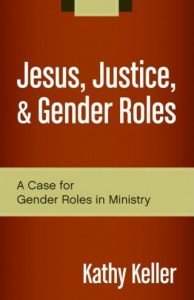
Jesus, Justice, & Gender Roles: A Case for Gender Roles in Ministry by Kathy Keller.

This is part of Zondervan's "Fresh Perspectives on Women in Ministry" series, the other volumes being John Dickson's Hearing Her Voice: A Case for Women Giving Sermons (see my review here) and Michael Bird's Bourgeois Babes, Bossy Wives, and Bobby Haircuts: A Case for Gender Equality in Ministry.

Kathy Keller is the wife of Tim Keller, pastor of Redeemer Presbyterian Church in New York City. The book is written in two parts. The first part ("Hermeneutical Imperatives") discusses relevant New Testament texts. Keller seems to be a soft complementarian. She translates 1 Timothy 2:12 as "I do not permit a woman to authoritatively teach a man", and believes that this still applies today. On the other hand, she is fine with women leading mixed Bible study groups. Following Redeemer's policy, she believes that women can do everything in the church that a non-ordained man can do. This does, however, presuppose a very high view of ordination. Although the emphasis in the pastoral epistles is certainly on the work of the pastor, especially preaching and teaching, Paul does not say "I do not permit a non-ordained person to authoritatively teach a man". In fact, just a few verses before, Paul had said that "the men should pray, lifting holy hands", and that the women "should adorn themselves in respectable apparel" (1 Tim. 2:8-9). Clearly, then, male/female roles and conduct are in mind, and not merely the ordained/non-ordained distinction.

In the second part of the book ("Personal Journeys"), Keller is apparently trying to reach out to disaffected women. She distances herself from anyone who is more complementarian than she (p. 33):
I am frequently embarrassed by others who use the title "complementarian" but who go beyond Scripture to legislate arbitrary rules about the age of boys when women must not teach Sunday school to them any longer, or whether a female small group leader should have a male co-leader if the group is mixed, and so on.

More disturbing, however, are Keller's views about the eternal subordination of the Son (p. 47). She says, "Jesus' submission to the Father was limited to his earthly incarnation" and "to my knowledge, no complementarian has ever espoused such a thing, despite egalitarian charges to the contrary". Well, Keller's knowledge is rather limited, because a host of complementarians have demonstrated that this is the historic Christian doctrine. See, for example, Biblical Evidence for the Eternal Submission of the Son to the Father by Wayne Grudem, The Eternal Subordination of the Son Is the Historic Doctrine of the Church by Dave Miller, and A Defense of the Doctrine of the Eternal Subordination of the Son by Stephen Kovach and Peter Schemm.

I'm afraid I couldn't help thinking that Keller was selected to write this book because Zondervan wanted the complementarian case to be presented by a woman. It would, however, have been better to ask someone more qualified to write this volume.

Wednesday, October 22, 2014

A revolution based on what a verse doesn't say

Hearing Her Voice: A Biblical Invitation for Women to Preach by John Dickson

This book is all about one verse in the New Testament: 1 Timothy 2:12, "I do not permit a woman to teach or to have authority over a man; she must be silent." Dickson argues that the verse does not forbid women from giving sermons today. His argument is as follows (pp. 80-81): There are many different different forms of public speaking in the New Testament, such as "exhorting", "preaching", and "teaching". Only one of them is forbidden to women – "teaching", in 1 Tim. 2:12. According to Dickson, this actually refers to "preserving and laying down the traditions handed on by the apostles", and this is not what happens in most modern-day sermons. Hence, women are allowed to give sermons today.

This is a rather idiosyncratic, and certainly very narrow definition of "teaching", and Dickson is not convincing. But even if we were to grant his definition, he is still on very flimsy ground.

Dickson fails to demonstrate why women are allowed to "exhort". The New Testament seems to use that word in two different ways: both personal encouragement, and delivering a "word of exhortation". The latter is used in Hebrews 13:22, in reference to the entire book, and Hebrews does seem to be a sermon, or at least composed of sermonic material. Why can women give this sort of exhortation? Dickson seems to suggest that because that particular word is not used as a prohibited activity for women, it is allowed. In this way, Dickson stands firmly in the Anglican tradition of the normative principle of worship, holding that whatever is not forbidden is allowed, but as an adherent of the regulative principle, I must reject this. The onus is on Dickson to demonstrate that women are allowed to preach; the fact that they are "not forbidden" is not good enough.

Again, even if we accept Dickson's definition of teaching, it is much better to see it applying today as "telling people what the Bible says". In fact, there is another possible definition, which Dickson completely ignores: "teaching" is what teachers do. And the New Testament says a lot about "teachers". Unfortunately, Dickson fails to mention Ephesians 4:11 ("He gave some to be apostles, and some to be prophets, and some to be evangelists, and some to be pastors and teachers"). Actually, he does allude to it on p. 78, and seems to suggest that the office of teacher has ceased. But this verse is talking about the pastor/teacher as a single office, and this office is restricted to men (1 Tim. 3:1-2). This is the office that Timothy held, and he was told to devote himself to "the public reading of Scripture, to exhortation, to teaching" (1 Tim. 4:13). This is describing the work that a (male) pastor does, and there is no indication in the New Testament that other people do this as well. Thus, there are good reasons why we would conclude from the New Testament that women are not allowed to "exhort", even if we grant Dickson's idea that modern-day sermons are essentially "exhortations" based on the text.

In short, Dickson is presenting an argument from silence. The book has a very feminist-sounding title, and my edition has quite an outrageous subtitle: "A Biblical Invitation for Women to Preach". (Other editions have "A Case for Women Giving Sermons"). Well, it's not a biblical invitation at all. It is based entirely on what Dickson argues one verse is not saying. We should not base doctrines on what single verses say, let alone on what they don't say.

Thursday, September 11, 2014

Tragic misapprehensions

Rome Sweet Home by Scott and Kimberly Hahn

This is the story of Scott and Kimberly Hahn's conversion to Roman Catholicism. They came out of evangelical Protestantism, and both studied at Grove City College and Gordon–Conwell Theological Seminary.

It's an intriguing story, for a couple of reasons. Firstly, Scott became a Catholic a few years before Kimberly, and they relate the struggles they had in a "mixed marriage". Secondly, one can detect in this book a trajectory from intellectual conviction (believing that the Roman Catholic Church is the True Church) to emotional connection (feeling at home in the Catholic Church).

However, both of these reasons are built on flimsy foundations. Firstly, the Hahns completely misunderstand key Protestant doctrines such as Sola Scriptura. Now, Rome Sweet Home is more than twenty years old, and it is quite likely that the Hahns have refined their understanding as they have engaged in Catholic apologetics, but they think that Sola Scriptura means the Bible is the "Christian's only authority" (p. 53). As Keith Mathison demonstrates in The Shape of Sola Scriptura, that is most emphatically what it does not mean. Rather, it means the Bible is the only ultimate authority. It is a shame that both these people could study at an evangelical seminary and not know this.

Secondly, their emotional connection to the Catholic Church is also a flimsy foundation for conversion. Kimberly says regarding the rosary, "I really felt the Lord was giving his approval and ministering to me through it" (p. 160). It is, of course, impossible to argue with such feelings. But it is significant that the Hahns need to retreat into such mysticism in order to justify their conversion.

The Hahns make much of 1 Timothy 3:15, where it says that that the Church is the "pillar and foundation of the truth". They rightly point out that this might go against the evangelical instinct of regarding the Bible as the pillar and foundation of the truth. But quite apart from the fact that both could be true, there is still no reason to believe that Paul is talking here about the Church of Rome.

This is therefore a rather sad book. The education that the Hahns received and the conversations they had with evangelical friends were not sufficient to keep them from converting to Rome. But they did so on the basis of some tragic misapprehensions concerning Protestant doctrine and spirituality.

Monday, September 08, 2014

An important theme, but mixed contributions

The Holy Spirit and Reformed Spirituality

The volume is a Festschrift of sorts. A Festschrift is a collection of essays written in honour of a particular academic, usually on a topic that is dear to that academic's heart. Well, The Holy Spirit and Reformed Spirituality honours Geoff Thomas, who is not an academic at all, but rather an ordinary pastor.

The theme of this book is an important one, for two reasons. Firstly, there seems to be a misconception that Reformed theology is weak on the Holy Spirit. Some would even suggest that while Reformed theology may be good on soteriology, when it comes to pneumatology we need to turn to Charismatic theology.

Now, it is true that there is no chapter in the original Westminster Confession of Faith specifically on the Holy Spirit, but many reformed theologians have written volumes on the doctrine of the Holy Spirit: George Smeaton, Abraham Kuyper, and James Buchanan in previous generations, and Sinclair Ferguson more recently.

The second reason why this topic is important is that there are some people who like reformed theology, but prefer other spiritualities. Catholic writers like Brendan Manning and Henri Nouwen are quite popular in some Reformed circles. But although Reformed spirituality is often neglected, it is inseparable from Reformed theology.

Unfortunately, the essays in this volume do not really match the importance of the theme. It is often the case that contributions to Festschriften vary in quality, but overall this book is somewhat disappointing. It was interesting to see no less than four chapters dealing with some aspect of John Owen's thought. Two of these (by Carl Trueman and Derek Thomas) were good, but the other two seemed to merely rehash what Owen had written. Similarly, there is another chapter that is merely rehashing Louis Berkhof.

Even more disappointing is Stephen Turner's contribution on the call to the ministry. Turner notes that Acts 13:2 describes the Holy Spirit calling men to ministry. He suggests that this was communicated through a prophet, and acknowledges that we no longer have prophets in that sense. But Turner still wants to hold to the idea that today the Holy Spirit calls men via an "inward" call. Yet that is simply not in the text – the passage is quite clearly describing an outward call.

On the other hand, Robert Oliver's piece on Edward Dering is very good. This book really is a mixed bag, and generally fails to live up to the promise of its title.

Wednesday, April 30, 2014

Beowulf in Florida

Boys of Blur by N. D. Wilson

N. D. Wilson's latest story is essentially a zombie novel, but don't let that turn you off. (In fact, he never even uses the word.) I was a little sceptical at first as to how plausible the supernatural elements were going to be, but they work, mainly because of the way that Wilson draws on the great Anglo-Saxon poem, Beowulf.

Wilson has a special interest in writing American stories. In this interview, concerning The Dragon's Tooth, he notes that growing up, he had the assumption that "you had to be in England if you wanted to have a magical adventure", and so he set out to make magical adventure possible in America. Boys of Blur is set in Florida's  Everglades region. It does for Florida what 100 Cupboards did for Kansas; incidentally, it also does for American football what 100 Cupboards did for baseball.

Perhaps the biggest strength of the novel is the way it brilliantly depicts what it means to face temptation. Usually this is a temptation to anger, resentment, or envy – e.g. "Just about every human on the planet was better off than Charlie at this moment" (p. 157) or "This stupid town and all its petty people deserved everything they were getting" (p. 169). But this is an optimistic novel – the main characters resist these tempting thoughts. Wilson also eschews any form of moral ambiguity – these thoughts are always depicted as being wrong.

This is a great story, that I can heartily recommend to young and old alike. Only one minor quibble: on p. 95 it says "the two tumbled off of Charlie". There's no excuse for that.

Finally, here is a very good review of the book: You’ve got your aforementioned zombies as well as a paean to small town football, an economy based on sugar cane harvesting, spousal abuse, and rabbit runs. It sounds like a dare, honestly. “I dare you to combine these seemingly disparate elements into a contemporary classic”.

Wednesday, March 19, 2014

Should be part of every theological curriculum

Pastors in the Classics: Timeless Lessons on Life and Ministry from World Literature by Leland Ryken, Philip Ryken and Todd Wilson

This is one of very few books on an interesting and significant subject, and I hope it becomes widely used.

This volume covers seventy books in which Christian ministers feature prominently. Twelve books are covered in depth, while the rest have enough information to help you evaluate whether you want to read the book.

In fact, I found this book made me want to read some of the novels it describes. I have read eleven of the books (The Canterbury Tales, The Diary of a Country Priest, Gilead, And the Shofar Blew, The Book of Bebb, Death in Holy Orders, the Father Brown stories, Mansfield Park, Pride and Prejudice, The Private Memoirs and Confessions of a Justified Sinner, and The Sunday Wife), while another six I hope to read this year (The Vicar of Wakefield, Witch Wood, The Mackerel Plaza, The Dean's Watch, The Warden, and Silence). My only quibble is that the book didn't include Madeleine L'Engle's A Live Coal in the Sea.

I would love to see this book used in seminaries and theological colleges, as a launching pad to reading some of the books covered. It would be so helpful to prospective pastors to meditate on and discuss these fictional portrayal of ministers. Even a reading course of four such books would be a big help in thinking through various pastoral and theological issues. Pastors in the Classics makes an important contribution to the Christian Church.

Wednesday, January 15, 2014

How to be a writer on $10,000 a year

I have been been reading Boswell's Life of Johnson, and it's quite fascinating. I'm up to Johnson going to London to try to make a living as a writer. Boswell records a hypothetical budget that one of Johnson's friends had explained to him:
Thirty pounds a year was enough to enable a man to live there without being contemptible. He allowed ten pounds for clothes and linen. He said a man might live in a garret at eighteen-pence a week; few people would inquire where he lodged; and if they did, it was easy to say, "Sir, I am to be found at such a place." By spending three-pence in a coffeehouse, he might be for some hours every day in very good company; he might dine for six-pence, breakfast on bread and milk for a penny, and do without supper.
Samuel Johnson in 1772
Let's break that down:

Item
Per day
Per week
Per year
Clothes

4 s.
£ 10
Rent

18 d.
£ 4
Food
7 d.
4 s.
£ 10
Coffee
3 d.
18 d.
£ 4

Now, this website tells me that £1 in 1750 would be the equivalent of £190 today, and this in turn equates to A$350. This gives us an annual budget of $10,000:

Item
Per day
Per week
Per year
Clothes

$70
$3,500
Rent

$30
$1,500
Food
$10
$70
$3,500
Coffee
$4
$30
$1,500

For a writer in Melbourne, the coffee works out about right. The food budget would be roughly equivalent – $2 a day will give you bread and milk for breakfast, while $8 will fill you up in Chinatown. Unfortunately, one would be hard pressed to find accommodation at even the most dingiest dive for $30 a week. The clothes budget, both then and now, is wildly disproportionate.

Monday, December 30, 2013

20 books John plans to read in 2014

See my previous years' lists: 2010, 2011, 2012, 2013. Last year I listed 25 books; I have finished 17 of them, and am currently reading another five. Altogether, I read 83 books in 2013.

Anyway, here is my so-called "shelfie":


Five novels:
Pearls, Girls and Monty Bodkin by P. G. Wodehouse 13th Feb.

I include a Wodehouse book on my reading list every year. This will be the 22nd one I have read.
The Dean's Watch by Elizabeth Goudge 25th Oct.

I read City of Bells by the same author in 2012.
The Mackerel Plaza by Peter de Vries 25th Aug.

In his Dutch Calvinism in Modern America, James Bratt describes Peter de Vries as a "secular Jeremiah, a Christian Reformed Church missionary to the smart set."
The Immaculate Deception by Iain Pears 22nd Feb.

This is part of a series of detective novels set in the art world. The protagonists are an English art dealer and his girlfriend, who is a member of the police art squad in Rome.
Scimitar's Edge by Marvin Olasky 19th Mar.

Olasky is best known as the editor of WORLD magazine, but among many other books, he has also written this novel.

Five theological books:

An Old Testament Theology by Bruce Waltke

I have a particular interest in the Old Testament, and aim to read one book like this a year.
Through his Eyes: God's Perspective on Women in the Bible by Jerram Barrs 11th Feb.

This book discusses about twenty different women in the Bible. This book will, I think, help me in my doctoral thesis, which is on the portrayal of women in the Book of Samuel.
The Four: A Survey of the Gospels by Peter Leithart 28th Dec.

I really like Leithart, and this book seems to be in the same vein as his Deep Exegesis, which I read a few years ago.
The Hope Fulfilled: Essays in Honor of O. Palmer Robertson 31st Jul.

I generally enjoy Festschriften, and this one has a really interesting collection of essays.  

"Right Reason" and the Princeton Mind: An Unorthodox Proposal by Paul Kjoss Helseth 11th Feb.

I am reading the Princetonians in some depth this summer, presently engaged with Charles Hodge's The Way of Life as well as Archibald Alexander's Thoughts on Religious Experience. The "unorthodox proposal" in this book is that the Princetonians were consistently Reformed thinkers rather than Enlightenment rationalists.

Five more Christian books:
Death by Living by N. D. Wilson 10th Jan.

I love Wilson's fiction (see my reviews of Empire of Bones and Leepike Ridge) and this looks like it is just as good.
Holy is the Day: Living in the Gift of the Present by Carolyn Weber 29th Jan.

Weber's Surprised by Oxford was excellent (see Kara's review) so I am keen to read this, even though the topic doesn't seem as interesting. 
Family Shepherds: Calling and Equipping Men to Lead Their Homes by Voddie Baucham 18th Apr.

I appreciated Baucham's Family Driven Faith (see my review) and this book is rather relevant for me.

Defending Constantine by Peter Leithart

Yes, Leithart is the lone writer to appear twice on this year's list. He argues in this book that Constantine was a genuine convert to Christianity.
Sermons in Solitary Confinement by Richard Wurmbrand 26th Mar.

Wurmbrand was a Romanian Christian pastor imprisoned from 1948 to 1956 (including three years in solitary confinement) and again from 1959 to 1964. After his release he left Romanian and founded the Voice of the Martyrs organization. This book will be my Lenten reading for 2014.

Five miscellaneous books:
The Lost Continent: Travels in Small-Town America by Bill Bryson 23rd Apr.

This book was published around 25 years ago, but I'm sure it will yield some fascinating insights. 
Q's Legacy by Helene Hanff 29th Jul.

Hanff is best known for her wonderful 84, Charing Cross Road. (I never realised until now that there was a comma in the title!) This book seems to be a prequel of sorts. The "Q" referred to in the title is Sir Arthur Quiller-Couch.
Wordsmithy: Hot Tips for the Writing Life by Douglas Wilson 18th Jan.

I don't particularly regard myself as an aspiring writer, but Wilson is usually fun to read.
The Dreams of the Witch House And Other Weird Stories by H. P. Lovecraft 30th Aug.

I have read a few Lovecraft stories, although now I think of him mostly in connection to Arkham Horror, which is one of my favourite board games.
Maps of the Ancient Sea Kings by  Charles Hapgood 9th Oct.

Hapgood argues that the Piri Reis map provides evidence of global exploration by an as yet undiscovered pre-classical civilization.