Keep in mind that these are not necessarily the best books I've read; some of them happened to be in the right place at the right time of my life. I have restricted myself to theology books; there are fiction books that have also influenced me profoundly, but that influence is usually subtler.
I have arranged the books in order of author. Five of these books are written by Americans; the other authors include one Australian, one Canadian, one Dutchman, one Englishman, and one Scot. Three of these books are available as pdf downloads: I have put a link in their titles.
 Robert Alter, The Art of Biblical Narrative (Basic Books, 1981)
Interestingly, the first book on this list is by a (non-Christian) Jew, and so "biblical" here means "Old Testament". Alter fundamentally misunderstands the Old Testament since he doesn't read it in the light of Jesus. And yet he has helped and encouraged me to read the text closely, discerning the importance of details, and asking why one word is used rather than another.
D. A. Carson, A Call To Spiritual Reformation: Priorities from Paul and His Prayers (Inter-Varsity Press, 1992)
This book, first published in 1992, was reissued in 2015 under the much better title, Praying with Paul: A Call To Spiritual Reformation. The book is actually an exposition of the prayers in Paul's epistles. This book transformed my prayer life (though not as thoroughly as I might wish) by challenging me regarding the things I pray for, and helping me to pray through passages of the Bible.
G. K. Chesterton, Orthodoxy (John Lane, 1908)
This is a whimsical account of how Chesterton became a Christian: "I am the man who with the utmost daring discovered what had been discovered before.... I did try to found a heresy of my own; and when I had put the last touches to it, I discovered that it was orthodoxy." This book gave me a vision of how grand orthodox Christian theology is: "There never was anything so perilous or so exciting as orthodoxy. It was sanity: and to be sane is more dramatic than to be mad."
Graeme Goldsworthy, Gospel and Kingdom (Paternoster Press, 1994)
There are many good books on how to read and understand the Old Testament, but this was the book that most clearly showed me how to read OT stories in the light of Christ. I had always been convinced of covenant as a unifying OT theme; this book encouraged me to place kingdom as a companion theme alongside it.
This book does for evangelical Protestantism what Chesterton's Orthodoxy does for catholic Christianity: provide a vision of how exciting believing the Bible and following Jesus can be. (In fact, while the authors call their approach "medieval Protestantism", Douglas Wilson has used the label "Chestertonian Calvinism" to describe his beliefs.) Needless to say, I caught the vision, and as a result this book is one of the clearest statements of my worldview, and the sort of things I wish to encourage in my home.
James B. Jordan, Through New Eyes: Developing a Biblical View of the World (Wolgemuth & Hyatt, 1988)
This book helped me to see how the Bible fit together: the connections between different passages, and how certain themes and motifs run right through God's Word. It also helped me to understand the created order in the light of Scripture.
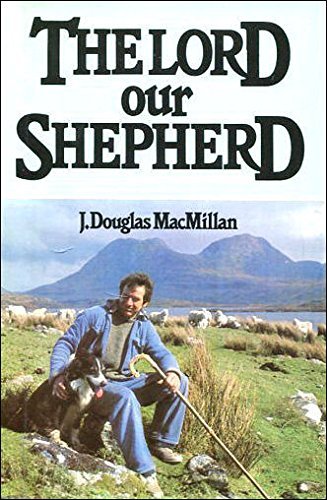
This exposition of Psalm 23 was one of the first theological books I read as a teenager, and it showed me how personal and pastoral biblical exposition can be. This is experiential Free Church piety at its warmest.
Vern Poythress, Philosophy, Science, and the Sovereignty of God (Presbyterian and Reformed, 1976)
It was Poythress who guided me from an interest in mathematics to an interest in theology. This book helped me get straight in my mind how everything fits together.
Klaas Schilder, Christ in his Suffering (Eerdmans 1938)
This is the first volume of a trilogy in which Schilder covers every aspect of Christ's Passion. I had the feeling while reading it that I was on holy ground. Schilder often breaks out into prayer and doxology.
R. C. Sproul, Jr., When You Rise Up: A Covenantal Approach to Homeschooling (P&R, 2004)
This was the book that convinced me of the value of homeschooling, and led me to adopt a perspective that sees homeschooling as first and foremost discipleship.
Concluding postscript:
Growing up in a Reformed Christian home, being a Calvinist was never going to be a problem. These books helped me work out the sort of Calvinism I wanted to pursue: a deeply biblical, warm, thoughtful and catholic Calvinism.


