Sir, I having been born and brought up in a country where there was very little preaching, the Lord knoweth I lived a great while in ignorance and blindness ; and yet, because I did often repeat the Lord's prayer, the apostles' creed, and the ten commandments, and in that I came sometimes to divine service, as they call it, and at Easter received the communion, I thought my condition to be good. But at last, by means of hearing a zealous and godly minister in this city, not long after my coming hither, I was convinced that my present condition was not good, and therefore I went to the same minister, and told him what I thought of myself; so he told me that I must frequent the hearing of sermons, and keep the Sabbath very strictly, and leave off swearing by my faith and troth, and such like oaths, and beware of lying, and all idle words and communication ; yea, and said he, you must get good books to read on, as Mr. Dodd on the Commandments, Mr. Bolton's Directions for Comfortable Walking with God, Mr. Brinsley's True Watch, and such like ; and many similar exhortations and directions he gave me, the which I liked very well, and therefore endeavoured myself to follow them. So I fell to the hearing of the most godly, zealous, and powerful preachers that were in the city, and wrote their sermons after them ; and when God gave me a family, I prayed with them, and instructed them, and repeated sermons to them, and spent the Lord's day in public and private exercises, and left off my swearing, and lying, and idle talking ; and, according to exhortation, in few words, I did so reform myself and my life, that whereas before I had been only careful to perform the duties of the second table of the law, and that to the end I might gain favour and respect from civil, honest men, and to avoid the penalties of man's law, or temporal punishment, now I was also careful to perform the duties required in the first table of the law, and that to gain favour and respect from religious, honest men, and to avoid the penalty of God's law, even eternal torments in hell. Now, when professors of religion observed this change in me, they came to my house, and gave unto me the right hand of fellowship, and counted me one of that number : and then I invited godly ministers to my table, and made much of them ; and then, with that same Micah mentioned in the book of Judges, I was persuaded the Lord would be merciful unto me, because I had gotten a Levite to be my priest, Judges xvii. 13. In a word, I did now yield such an outward obedience and conformity to both tables of the law, that all godly ministers and religious, honest men who knew me, did think very well of me, counting me to be a very honest man, and a good christian ; and indeed I thought so of myself, especially because I had their approbation. And thus I went on bravely a great while, even until I read in Mr. Bolton's works, that the outward righteousness of the Scribes and Pharisees was famous in those times ; for, be- sides their forbearing and protesting against gross sins, as murder, theft, adultery, idolatry, and the like, they were frequent and constant in prayer, fasting, and alms-deeds, so that, without question, many of them were persuaded that their doing would purchase heaven and happiness. Whereupon I concluded, that I had as yet done no more than they ; and withal I considered, that our Saviour says, " Except your righteousness exceed the righteousness of the Scribes and Pharisees, ye cannot enter into the kingdom of God," Matt. v. 20; yea, and I also considered that the apostle says, "He is not a Jew that is one outwardly ; but he that is one inwardly, whose praise is not of men, but of God," Rom. ii. 28 29. Then did I conclude that I was not yet a true Christian ; for, Said I in my heart, I have contented myself with the praise of men, and so have lost all my labour and pains in performing duties ; for they have been no better than outside performances, and, therefore, they must all fall down in a moment. I have not served God with all my heart ; and, therefore, I see I must either go further, or else I shall never be happy. Whereupon I set about the keeping of the law in good earnest, and laboured to perform duties, not only outwardly, but also inwardly from my heart ; I heard, and read, and prayed, and laboured, to bring my heart, and forced my soul to every duty ; I called upon the Lord in good earnest, and told him, that whatsoever he would have me to do, I would do it with all my heart, if he would but save my soul. And then I also took notice of the inward corruptions of my heart, the which I had not formerly done, and was careful to govern my thoughts, to moderate my passions, and to suppress the motions and risings of lust, to banish pride and speculative wantonness, and all vain and sinful desires of my heart ; and then I thought myself not only an outside Christian, but also an inside Christian, and therefore a true Christian indeed. And so I went on comfortably a good while, till I considered that the law of God requires passive obedience as well as active : and therefore I must be a sufferer as well as a doer, or else I could not be a Christian indeed ; whereupon I began to be troubled at my impatience under God's correcting hand, and at those inward murmurings and discontents which I found in my spirit in time of any outward calamity that befel me ; and then I laboured to bridle my passions, and to submit myself quietly to the will of God in every condition ; and then did I also, as it were, begin to take penance upon myself, by abstinence, fasting, and afflicting my soul ; and made pitiful lamentations in my prayers, which were sometimes also accompanied with tears, the which I was persuaded the Lord did take notice of, and would reward me for it ; and then I was persuaded that I did keep the law, in yielding obedience both actively and passively. And then was I confident I was a true Christian, until I considered, that those Jews, of whom the Lord complains, Isa. Iviii. did as much as I ; and that caused me to fear that all was not right with me as yet. Whereupon I went to another minister, and told him that though I had done thus and thus, and suffered thus and thus; yet was I persuaded, that I. was in no better condition than those Jews, O-yes! said he ; you are in a better condition than they : for they were hypocrites, and served not God with all their hearts as you do. Then I went home contentedly, and so went on in my wonted course of doing and suffering, and thought all was well with me, until I bethought myself, that before the time of my conversion, I had been a transgressor from the womb ; yea, in the womb, in that I was guilty of Adam's transgression : so that I considered that although I kept even with God for the time present and to come, yet that would not free me from the guiltiness of that which was done before ; whereupon I was much troubled and disquieted in my mind. Then I went to a third minister of God's holy word, and told how the case stood with me, and what I thought of my state and condition. He cheered me up, bidding me be of good comfort: for how- ever my obedience since my conversion would not satisfy for my former sins ; yet, inasmuch as, at my conversion, I had confessed, lamented, deplored, bewailed, and forsaken them, God, according to his rich mercy and gracious promise, had mercifully pardoned and forgiven them. Then I returned home to my house again, and went to God by earnest prayer and supplication, and besought him to give me assurance of the pardon and forgiveness of my guiltiness of Adam's sin, and all my actual transgressions before my conversion ; and as I had endeavoured myself to be a good servant before, so I would still continue in doing my duty most exactly ; and so, being assured that the Lord had granted this my request, I fell to my business according to my promise ; I heard, I read, I prayed, I fasted, I mourned, I sighed, and groaned ; and watched over my heart, my tongue, and ways, in all my doings, actions, and dealings, both with God and man. But after a while, I growing better acquainted with the spiritualness of the law, and the inward corruptions of my own heart, I perceived that I had deceived myself, in thinking that I had kept the law perfectly ; for, do what I could, I found many imperfections in my obedience ; for I had been, and was still subject to sleepiness, drowsiness, and heaviness, in prayers and hearing, and so in other duties; I failed in the manner of performance of them, and in the end why I performed them, seeking myself in everything I did: and my conscience told me I failed in my duty to God in this, in my duty to my neighbour in that. And then I was much troubled again : for I considered that the law of God requires, and is not satisfied without, an exact and perfect obedience. And then I Went to the same minister again, and told him how I had purposed, promised, striven, and endeavoured, as much as possibly I could, to keep the law of God perfectly ; and yet by woful experience I had found, that I had, and did still transgress in many ways ; and therefore I feared hell and damnation. " Oh ! but," said he, " do not fear ; for the best of Christians have their failings, and no man keepeth the law of God perfectly ; and therefore go on, and do as you have done, in striving to keep the law perfectly ; and in what you cannot do, God will accept the will for the deed; and wherein you come short, Christ will help you out." And this satisfied and contented me very much. So I returned home again, and fell to prayer, and told the Lord that now I saw I could not yield perfect obedience to his law, and yet I would not despair, because I did believe that what I could not do Christ had done for me : and then I did certainly conclude, that I was now a Christian indeed, though I was not so before : and so have I been persuaded ever since. And thus, sir, you see I have declared unto you, both how it hath been with me formerly, and how it is with me for the present ; wherefore I would entreat you to tell me plainly and truly what you think of my condition.
Showing posts with label book extracts. Show all posts
Showing posts with label book extracts. Show all posts
Sunday, February 19, 2012
A taste of the Marrow: Nomista's testimony
I am currently reading The Marrow of Modern Divinity by Edward Fisher. It is a theological treatise written as a dialogue. This is a speech given by the character Nomista. The book raises the question of whether this person can be considered a Christian. What do you think, dear reader? I'd be very interested in your comments. I realise this quotation is rather long, but it is important to get the speech in full.


Sunday, February 27, 2011
Very useful for the student of logic
Our Descent from Israel Proved By Cumulative Evidence by Hew B. Colquhoun
(Available from New Boston Fine and Rare Books for $US 56.40)
 British Israelism is the idea that the British people are descended from the Ten Lost Tribes and are therefore the People of God in a special sense. There was a time, it seems, when it was all the rage - that time being eighty years ago. The combination of the end of the British empire and the founding of the modern state of Israel after World War II has virtually put an end to the idea.
This book isn't of merely historical interest, however. It also functions as a textbook of logical fallacies. I mention a few below, but I'm sure the careful reader will be able to find many more.
Of course, the book is not all bad. It made two sound biblical points. Firstly, there is nothing in the Bible to suggest that Jews have any distinct appearance. Paul gets mistaken for an Egyptian in Acts 21:38, while Jonah has to tell the sailors in Jonah 1:8 where he is from. Secondly, being Jewish is not, fundamentally a racial thing. Esther 8:17 says that "many people of other nationalities became Jews."
Anyway, here are some of the fallacies in the book.
1. False dichotomy: This is a false choice between two statements, when the reader may want to adopt a third statement.
So we have a choice of two theories, either that all our British ancestors were woad-painted savages in Caesar's time... or that we, as a race, have been civilised for at least 5000 years. (p. 31)
2. Argumentum ad hominem: Connecting a belief with a person's character or intelligence.
The man must be mad who, in the face of universal antiquity, refuses to believe that Constantine and his mother were Britons, born in Britain. (p. 43)
3. Contextomy: Quoting something out of context in order to support one's argument.
J. Foster Forbes... traces the builders of the megaliths, whom he calls the Iberians (i.e. Hebrews - H. B. C.) to the Egyptian city of Hu-Ra... (p. 62)
4. Argumentum ad verecundiam: (literally, "argument to respect") an appeal to authority.
The tracing of the Royal line of David to the present day fortunately presents no difficulty, because there is in the Royal archives at Windsor a chart showing the descent of our Royal Family from David the shepherd king, in unbroken line, and it should be borne in mind that no document finds its way into the Royal archives which has not pased through some Government department which is responsible for its accuracy... (p. 112)
 5. Post hoc ergo propter hoc: (literally, "after this, therefore because of this") assuming that because one thing comes after another, the earlier must cause the produce the later.
We find the Trident on a coin of Antigonus, King of Judea, circa 39 BC, also on a coin of Berytus, Beruit in Syria. We follow the Trident to Eubaea in Greece, to Tarentum in the South of Italy, also on a coin of the Bretti, where the Kingdom of the Brittani first existed. A comparison of this coin of the Bretti with our modern English penny should satisfy anyone as to their identity. (p. 128)
Really, this is like shooting fish in a barrel.
(Available from New Boston Fine and Rare Books for $US 56.40)
 British Israelism is the idea that the British people are descended from the Ten Lost Tribes and are therefore the People of God in a special sense. There was a time, it seems, when it was all the rage - that time being eighty years ago. The combination of the end of the British empire and the founding of the modern state of Israel after World War II has virtually put an end to the idea.
This book isn't of merely historical interest, however. It also functions as a textbook of logical fallacies. I mention a few below, but I'm sure the careful reader will be able to find many more.
Of course, the book is not all bad. It made two sound biblical points. Firstly, there is nothing in the Bible to suggest that Jews have any distinct appearance. Paul gets mistaken for an Egyptian in Acts 21:38, while Jonah has to tell the sailors in Jonah 1:8 where he is from. Secondly, being Jewish is not, fundamentally a racial thing. Esther 8:17 says that "many people of other nationalities became Jews."
Anyway, here are some of the fallacies in the book.
1. False dichotomy: This is a false choice between two statements, when the reader may want to adopt a third statement.
So we have a choice of two theories, either that all our British ancestors were woad-painted savages in Caesar's time... or that we, as a race, have been civilised for at least 5000 years. (p. 31)
2. Argumentum ad hominem: Connecting a belief with a person's character or intelligence.
The man must be mad who, in the face of universal antiquity, refuses to believe that Constantine and his mother were Britons, born in Britain. (p. 43)
3. Contextomy: Quoting something out of context in order to support one's argument.
J. Foster Forbes... traces the builders of the megaliths, whom he calls the Iberians (i.e. Hebrews - H. B. C.) to the Egyptian city of Hu-Ra... (p. 62)
4. Argumentum ad verecundiam: (literally, "argument to respect") an appeal to authority.
The tracing of the Royal line of David to the present day fortunately presents no difficulty, because there is in the Royal archives at Windsor a chart showing the descent of our Royal Family from David the shepherd king, in unbroken line, and it should be borne in mind that no document finds its way into the Royal archives which has not pased through some Government department which is responsible for its accuracy... (p. 112)
 5. Post hoc ergo propter hoc: (literally, "after this, therefore because of this") assuming that because one thing comes after another, the earlier must cause the produce the later.
We find the Trident on a coin of Antigonus, King of Judea, circa 39 BC, also on a coin of Berytus, Beruit in Syria. We follow the Trident to Eubaea in Greece, to Tarentum in the South of Italy, also on a coin of the Bretti, where the Kingdom of the Brittani first existed. A comparison of this coin of the Bretti with our modern English penny should satisfy anyone as to their identity. (p. 128)
Really, this is like shooting fish in a barrel.
Friday, August 13, 2010
John's July and August Reading
Currently Reading:
Women of the Old Testament by Abraham Kuyper
This was the first book published by Zondervan. It covers fifty women, including some fairly obscure ones such as the woman of Bahurim. Most of the devotions are fairly moralistic: in regards to the wife of Jeroboam, for example, Kuyper notes that what "the Scriptures intend to teach us by this episode" is that wives should not obey their husbands if they tell them to do evil.
Kuyper does make some use of biblical theology, though - in the chapter on Rebecca, he points out that in favouring Jacob over Esau, Rebecca is partly responsible for the enmity between Edom and Israel - an enmity that extends all the way down to Herod and Jesus.
And a number of the applications in this book are very perceptive. In discussing the Queen of Sheba, Kuyper suggests that
These two books were both published last year. I am reading them in preparation for a talk I am giving on Chesterton at St Joseph's Catholic Church, Chelsea on Thursday, 3rd September at 7:30pm. If you live in Melbourne, feel free to come along.
The Lost Symbol by Dan Brown
It always says something when the name of the author is much bigger than the title of the book. This is the third book in the Robert Langdon series, after The Da Vinci Code and Angels and Demons. Like the other two books, the front page of this novel contains a "Fact" section, this time asserting that "All rituals, science, artwork, and monuments in this novel are real." I don't know what "real" means in this context, but here is an example of a scientific statement in the book:
The Masters by C. P. Snow
C. P. Snow was a scientist who became a writer. This novel is set in an imaginary Cambridge college, and seems to be set around the intrigues within the faculty as they choose a new Master.

Finished Recently:
The Two Cultures by C. P. Snow
Being both a scientist and a novelist, Snow was aware of the divide that often exists between those in the science and those in the humanities - these are the "two cultures" to which the title of this 1959 lecture refers. The point Snow argues is that they don't usually understand each other, and are mutually ignorant of each other's work. He notes that not many in the "traditional culture" (i.e. the humanities) can describe the Second Law of Thermodynamics, but asking them to do so is, in fact, the scientific equivalent of asking "Have you read a work of Shakespeare's?"
The edition of the book that I read had fifty pages of the original lecture, plus seventy pages of introduction. But such an introduction is probably appropriate given the lecture's influence - it is, for example, included in this list of the hundred most influential books since the war.
Travel with William Cowper by Paul Williams
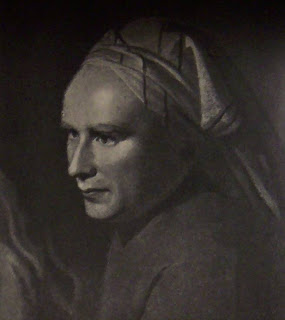 I have blogged about this series before, and this volume was similar to the ones I had read on John Knox and Robert Murray M'Cheyne. Cowper is best known for the hymns God moves in a mysterious way, O for a closer walk with God and There is a fountain filled with blood - but is also notable for his struggle with insanity and depression. He had a mental breakdown every ten years: in 1752, 1763 and 1773.
The Philippian Fragment by Calvin Miller
This book is a series of fictional letters from the second century. The author purports to be the pastor of the church at Philippi. There is a lot of pastoral wisdom here, though it gets rather silly at times.
The Flanders Panel by Arturo Pérez-Reverte
This was a rare re-reading. The Flanders Panel is a mystery novel about art and chess, and so it's right up my alley. It does, however, contain violence and sensuality, and so I am not recommending it here. One thing struck me as I read it again: not only is the painting in the story fictional, but it reflects an imaginative history of a non-existent country: the Duchy of Ostenburg, which is described as being somewhere between Luxembourg and Flanders. In fact, I only realised it was fictional when I tried to look it up on Wikipedia.
Women of the Old Testament by Abraham Kuyper
This was the first book published by Zondervan. It covers fifty women, including some fairly obscure ones such as the woman of Bahurim. Most of the devotions are fairly moralistic: in regards to the wife of Jeroboam, for example, Kuyper notes that what "the Scriptures intend to teach us by this episode" is that wives should not obey their husbands if they tell them to do evil.
Kuyper does make some use of biblical theology, though - in the chapter on Rebecca, he points out that in favouring Jacob over Esau, Rebecca is partly responsible for the enmity between Edom and Israel - an enmity that extends all the way down to Herod and Jesus.
And a number of the applications in this book are very perceptive. In discussing the Queen of Sheba, Kuyper suggests that
The Wisdom of Mr. Chesterton by Dave Armstrong and G. K. Chesterton, Theologian by Aidan NicholsThe Queen of Sheba was not much different from many of the young women of the higher classes among us today. They are eager to know everything.They have highly developed tastes... Had they lived in Solomon's day, they would certainly have made a trip to Jerusalem, just as they now travel to Paris and London, to Vienna and Berlin... Doubtless, they would have marveled in breath-taking bewonderment at the external beauty of the Temple at Jerusalem. But they forget one thing. They forget that a greater than Solomon is here. They forget that that greater One does not primarily ask them to appreciate the beauty of His word, but that he asks them for the surrender of their hearts... For that reason, these interesting and interested young women remain at the stage which the Queen of Sheba reached and go no farther. They come to Jerusalem. They are amazed and awe-struck. And they leave Jerusalem.

These two books were both published last year. I am reading them in preparation for a talk I am giving on Chesterton at St Joseph's Catholic Church, Chelsea on Thursday, 3rd September at 7:30pm. If you live in Melbourne, feel free to come along.
The Lost Symbol by Dan Brown
It always says something when the name of the author is much bigger than the title of the book. This is the third book in the Robert Langdon series, after The Da Vinci Code and Angels and Demons. Like the other two books, the front page of this novel contains a "Fact" section, this time asserting that "All rituals, science, artwork, and monuments in this novel are real." I don't know what "real" means in this context, but here is an example of a scientific statement in the book:
In 2001, in the hours following the horrifying events of September 11, the field of Noetic Science made a quantum leap forward. Four scientists discovered that as the frightened world came together and focused in shared grief on this single tragedy, the outputs of thirty-seven different Random Event Generators around the world suddenly became significantly less random.This quote, on the other hand, is probably fictional rather than scientific:
Katherine had created beautifully symmetrical ice crystals by sending loving thoughts to a glass of water as it froze.
The Masters by C. P. Snow
C. P. Snow was a scientist who became a writer. This novel is set in an imaginary Cambridge college, and seems to be set around the intrigues within the faculty as they choose a new Master.

Finished Recently:
The Two Cultures by C. P. Snow
Being both a scientist and a novelist, Snow was aware of the divide that often exists between those in the science and those in the humanities - these are the "two cultures" to which the title of this 1959 lecture refers. The point Snow argues is that they don't usually understand each other, and are mutually ignorant of each other's work. He notes that not many in the "traditional culture" (i.e. the humanities) can describe the Second Law of Thermodynamics, but asking them to do so is, in fact, the scientific equivalent of asking "Have you read a work of Shakespeare's?"
The edition of the book that I read had fifty pages of the original lecture, plus seventy pages of introduction. But such an introduction is probably appropriate given the lecture's influence - it is, for example, included in this list of the hundred most influential books since the war.
Travel with William Cowper by Paul Williams
 I have blogged about this series before, and this volume was similar to the ones I had read on John Knox and Robert Murray M'Cheyne. Cowper is best known for the hymns God moves in a mysterious way, O for a closer walk with God and There is a fountain filled with blood - but is also notable for his struggle with insanity and depression. He had a mental breakdown every ten years: in 1752, 1763 and 1773.
The Philippian Fragment by Calvin Miller
This book is a series of fictional letters from the second century. The author purports to be the pastor of the church at Philippi. There is a lot of pastoral wisdom here, though it gets rather silly at times.
The Flanders Panel by Arturo Pérez-Reverte
This was a rare re-reading. The Flanders Panel is a mystery novel about art and chess, and so it's right up my alley. It does, however, contain violence and sensuality, and so I am not recommending it here. One thing struck me as I read it again: not only is the painting in the story fictional, but it reflects an imaginative history of a non-existent country: the Duchy of Ostenburg, which is described as being somewhere between Luxembourg and Flanders. In fact, I only realised it was fictional when I tried to look it up on Wikipedia.
Monday, May 24, 2010
John's May Reading
Currently Reading:
Brave New Family: G. K. Chesterton on Men and Women, Children, Sex, Divorce, Marriage and the Family
I am giving a talk on Chesterton at St Joseph's Catholic Church, Chelsea on Thursday, 2nd September at 7:30pm. This is a wonderful collection of pieces, recently compiled. This morning I read "The Library of the Nursery," where Chesterton argues that children do not really need books of Nonsense. "Sages and grey-haired philosophers," to be sure, "ought to sit up all night reading Alice in Wonderland," but
I have been thinking through the issue of common grace in preparation for my talk on Abraham Kuyper at the Religion in the Public Square colloquium, and I thought this would be an opportunity to finally have a go at reading this book. Much of what Schilder wrote on the subject of culture and grace is a response to Kuyper's ideas:
I've been greatly blessed in the past by reading Schilder's trilogy on the suffering and death of Christ. Those were rich meditations, but difficult to read - it literally took me years to get through the three books. So far, Christ and Culture seems to suffer from the same sort of lack of readability.
Passage by Connie Willis
I don't often re-read books, but this one is just so good. It's about a couple of researchers who manage to simulate near-death experiences. This is a gripping story, and Willis is most adept at getting the reader to identify with the main characters.
Reading the Old Testament by John Barton
As many readers will know, I am starting to specialise in the Old Testament in my reading and study, and this book provides a good introduction to the different types of approaches and "criticisms" out there. I have found it useful in writing the Wikipedia article on canonical criticism.

Finished Recently:
Three Views on the New Testament Use of the Old Testament
This was a difficult read, and it's hard to explain what are the three views in question. They revolve around fulfilment of Old Testament prophecies. For example, Matthew 2:15 indicates that certain events in Jesus' life "fulfilled what the Lord had said through the prophet: Out of Egypt I called my son." This is a quotation of Hosea 11:1. Now, as I understand them, Walter Kaiser would say that Hosea was revealed a truth about the Messiah, Darrell Bock would understand the passage as talking about God's Son, but that Jesus as well as Israel, fulfils that role, while Peter Enns would say that Hosea was not thinking about Christ at all, but since the whole of the Old Testament has Christ as the goal, it was reasonable of Matthew to make the connection.
This has been a burgeoning area of study in recent years, as witnessed by the massive Commentary on the New Testament Use of the Old Testament, which I often use in sermon preparation.
The Clown in the Belfry: Writings on Faith and Fiction by Frederick Buechner
Last time I blogged, I mentioned how I was reading Buechner's The Book of Bebb. I thought it would be appropriate to read some of his non-fiction at the same time. This is a collection of sermons and addresses. The title of the book comes from an anecdote about a certain Lyman Woodard who "stood on his head in the belfry with his feet toward heaven." That, says Buechner, "is a magical and magnificent and Mozartian thing to do."
Quitting Church: Why the Faithful are Fleeing and What to Do about It by Julia Duin
This book is about those who quit church, for such reasons as being hurt by a church, not being able to find good teaching, or not having churches take singleness seriously. Interestingly, one of the reasons covered is charismatics not being able to find a suitable church, since so many charismatic churches have, in recent years, moved away from exercising the extraordinary gifts.
Searching the Scriptures - A Feminist Introduction
The world of feminist hermeneutics is a desolate one, and I would not recommend venturing there without good reason. The essays in this book seem to be based on two premises: 1) the Bible is intensely patriarchal; 2) that's a bad thing. Still, the book wasn't quite as bad as I expected.
Brave New Family: G. K. Chesterton on Men and Women, Children, Sex, Divorce, Marriage and the Family
I am giving a talk on Chesterton at St Joseph's Catholic Church, Chelsea on Thursday, 2nd September at 7:30pm. This is a wonderful collection of pieces, recently compiled. This morning I read "The Library of the Nursery," where Chesterton argues that children do not really need books of Nonsense. "Sages and grey-haired philosophers," to be sure, "ought to sit up all night reading Alice in Wonderland," but
The child has no need of nonsense: to him the whole universe is nonsensical, in the noblest sense of that noble word. A tree is something top-heavy and fantastic, a donkey is as exciting as a dragon. All objects are seen through a great magnifying-glass; the daisy in the meadow is as large as a tree of the Hesperides, and the pebbles littered about a puddle will serve for the Islands of the Blest.Christ and Culture by Klaas Schilder
I have been thinking through the issue of common grace in preparation for my talk on Abraham Kuyper at the Religion in the Public Square colloquium, and I thought this would be an opportunity to finally have a go at reading this book. Much of what Schilder wrote on the subject of culture and grace is a response to Kuyper's ideas:
We are fog-bound. Even the followers of Dr. Abraham Kuyper are. For years and years they talked of nothing but “God’s honour in all spheres of life.” The more scholarly ones among them constantly repeated Kuyper’s adage concerning “sphere sovereignty.” Every “sphere” of “life” had its own “sovereignty. However; often they do no more than repeat this slogan. No wonder. For Abraham Kuyper himself could not clearly explain what exactly those “sovereigns” in all those “spheres” are. One single Sovereign—that we can accept and understand But as soon as one starts to speak about “sovereigns” in the plural, each of them in his own sphere, then things become vague.
I've been greatly blessed in the past by reading Schilder's trilogy on the suffering and death of Christ. Those were rich meditations, but difficult to read - it literally took me years to get through the three books. So far, Christ and Culture seems to suffer from the same sort of lack of readability.
Passage by Connie Willis
I don't often re-read books, but this one is just so good. It's about a couple of researchers who manage to simulate near-death experiences. This is a gripping story, and Willis is most adept at getting the reader to identify with the main characters.
Reading the Old Testament by John Barton
As many readers will know, I am starting to specialise in the Old Testament in my reading and study, and this book provides a good introduction to the different types of approaches and "criticisms" out there. I have found it useful in writing the Wikipedia article on canonical criticism.

Finished Recently:
Three Views on the New Testament Use of the Old Testament
This was a difficult read, and it's hard to explain what are the three views in question. They revolve around fulfilment of Old Testament prophecies. For example, Matthew 2:15 indicates that certain events in Jesus' life "fulfilled what the Lord had said through the prophet: Out of Egypt I called my son." This is a quotation of Hosea 11:1. Now, as I understand them, Walter Kaiser would say that Hosea was revealed a truth about the Messiah, Darrell Bock would understand the passage as talking about God's Son, but that Jesus as well as Israel, fulfils that role, while Peter Enns would say that Hosea was not thinking about Christ at all, but since the whole of the Old Testament has Christ as the goal, it was reasonable of Matthew to make the connection.
This has been a burgeoning area of study in recent years, as witnessed by the massive Commentary on the New Testament Use of the Old Testament, which I often use in sermon preparation.
The Clown in the Belfry: Writings on Faith and Fiction by Frederick Buechner
Last time I blogged, I mentioned how I was reading Buechner's The Book of Bebb. I thought it would be appropriate to read some of his non-fiction at the same time. This is a collection of sermons and addresses. The title of the book comes from an anecdote about a certain Lyman Woodard who "stood on his head in the belfry with his feet toward heaven." That, says Buechner, "is a magical and magnificent and Mozartian thing to do."
Quitting Church: Why the Faithful are Fleeing and What to Do about It by Julia Duin
This book is about those who quit church, for such reasons as being hurt by a church, not being able to find good teaching, or not having churches take singleness seriously. Interestingly, one of the reasons covered is charismatics not being able to find a suitable church, since so many charismatic churches have, in recent years, moved away from exercising the extraordinary gifts.
Searching the Scriptures - A Feminist Introduction
The world of feminist hermeneutics is a desolate one, and I would not recommend venturing there without good reason. The essays in this book seem to be based on two premises: 1) the Bible is intensely patriarchal; 2) that's a bad thing. Still, the book wasn't quite as bad as I expected.
Tuesday, January 19, 2010
John's January Reading
Currently Reading:
The Time Machine by H. G. Wells
I saw the 2002 film recently, and that inspired me to read the story. I had a Phoenix 60p edition (these were cheap imitations of the Penguin 60's design) on my shelf, and I started reading it before I realised it was an abridgement - chapters 3 to 6 of a twelve chapter novel. Fortunately, the whole book is available on Wikisource, so I'm reading it online now.
The Message of Zechariah by Barry Webb
I heard Barry Webb speak in Melbourne last July as part of an MTS training day, and that inspired me to preach through Zechariah. So that's what I'm currently doing on Sunday mornings at Aspendale. We're looking at Zechariah 3 this Sunday, and aim to finish the series at Easter.
Cohabitation and Marriage: A Pastoral Response by Greg Forster
Reading this book was helpful in thinking through what I mean when I say a book is biblical or not. This book is not biblical. Forster does not, for example, explain how the covenantal nature of marriage (as seen in Malachi 2:14) makes it different to cohabitation, nor does he discuss the relevance of Genesis 1 and 2. Being biblical means looking at what the Bible says is the nature and purpose of marriage. This is not to say that a biblical response needs to be unpastoral, but the subtitle of Forster's book really ought to be "A Sociological Response". Forster adopts a functional definition of marriage - examining the difference it makes socially - rather than a biblical one.
His Truth is Marching On: Advanced Studies on Prophecy in the Light of History by Ralph Woodrow
This seems to be mainly a response to premillennial dispensationalism.

Finished Recently:
The Paideia of God by Douglas Wilson
This is, I believe, the 18th book I've read by Douglas Wilson.
The Everlasting Man by G. K. Chesterton
The first half of the book deals with prehistoric man and pagan religion, and is somewhat mediocre. The second half is much better, and talks about Jesus. Although never reaching the dizzying heights of Orthodoxy, GKC does have some good things to say concerning the Church:
I read both these books in preparation for a workshop that I ran at PYV Summer Camp on Science and Christianity. Ratzsch discusses the nature and limits of science, while Schaeffer looks at Genesis in the light of a belief in the inerrancy of Scripture.
Sherlock Holmes: The Complete Novels by Arthur Conan Doyle
I decided to read all four Sherlock Holmes novels as a way of preparing to see the recent movie. I had read A Study in Scarlet and The Hound of the Baskervilles a long, long time ago, but now I read The Sign of Four and The Valley of Fear for the first time. Exciting stuff.
The Time Machine by H. G. Wells
I saw the 2002 film recently, and that inspired me to read the story. I had a Phoenix 60p edition (these were cheap imitations of the Penguin 60's design) on my shelf, and I started reading it before I realised it was an abridgement - chapters 3 to 6 of a twelve chapter novel. Fortunately, the whole book is available on Wikisource, so I'm reading it online now.
The Message of Zechariah by Barry Webb
I heard Barry Webb speak in Melbourne last July as part of an MTS training day, and that inspired me to preach through Zechariah. So that's what I'm currently doing on Sunday mornings at Aspendale. We're looking at Zechariah 3 this Sunday, and aim to finish the series at Easter.
Cohabitation and Marriage: A Pastoral Response by Greg Forster
Reading this book was helpful in thinking through what I mean when I say a book is biblical or not. This book is not biblical. Forster does not, for example, explain how the covenantal nature of marriage (as seen in Malachi 2:14) makes it different to cohabitation, nor does he discuss the relevance of Genesis 1 and 2. Being biblical means looking at what the Bible says is the nature and purpose of marriage. This is not to say that a biblical response needs to be unpastoral, but the subtitle of Forster's book really ought to be "A Sociological Response". Forster adopts a functional definition of marriage - examining the difference it makes socially - rather than a biblical one.
His Truth is Marching On: Advanced Studies on Prophecy in the Light of History by Ralph Woodrow
This seems to be mainly a response to premillennial dispensationalism.

Finished Recently:
The Paideia of God by Douglas Wilson
This is, I believe, the 18th book I've read by Douglas Wilson.
The Everlasting Man by G. K. Chesterton
The first half of the book deals with prehistoric man and pagan religion, and is somewhat mediocre. The second half is much better, and talks about Jesus. Although never reaching the dizzying heights of Orthodoxy, GKC does have some good things to say concerning the Church:
Tolstoy or some great preacher of peace among peasants has been shot as a mutineer for defying conscription; and a little while afterwards his few followers meet together in an upper room in remembrance of him. They never had any reason for coming together except that common memory; they are men of many kinds with nothing to bind them, except that the greatest event in all their lives was this tragedy of the teacher of universal peace. They are always repeating his words, revolving his problems, trying to imitate his character. The Pacifists meet at their Pentecost and are possessed of a sudden ecstasy of enthusiasm and wild rush of the whirlwind of inspiration, in the course of which they proceed to establish universal Conscription, to increase the Navy Estimates, to insist on everybody going about armed to the teeth and on all the frontiers bristling with artillery; the proceedings concluded with the singing of 'Boys of the Bulldog Breed' and 'Don't let them scrap the British Navy.' That is something like a fair parallel to the theory of these critics; that the transition from their idea of Jesus to their idea of Catholicism could have been made in the little upper room at Pentecost. Surely anybody's commonsense would tell him that enthusiasts who only met through their common enthusiasm for a leader whom they loved, would not instantly rush away to establish everything that he hated. No, if the 'ecclesiastical and dogmatic system' is as old as Pentecost it is as old as Christmas. If we trace it back to such very early Christians we must trace it back to Christ.Science & Its Limits: The Natural Sciences in Christian Perspective by Del Ratzsch and No Final Conflict by Francis A. Schaeffer
I read both these books in preparation for a workshop that I ran at PYV Summer Camp on Science and Christianity. Ratzsch discusses the nature and limits of science, while Schaeffer looks at Genesis in the light of a belief in the inerrancy of Scripture.
Sherlock Holmes: The Complete Novels by Arthur Conan Doyle
I decided to read all four Sherlock Holmes novels as a way of preparing to see the recent movie. I had read A Study in Scarlet and The Hound of the Baskervilles a long, long time ago, but now I read The Sign of Four and The Valley of Fear for the first time. Exciting stuff.
Subscribe to:
Posts (Atom)