I stopped reading for a while, because of sickness. Then we had company. Then we went on vacation. Lots of normal things in between. Here are a few comments on the books I've enjoyed since my last post.
Mudhouse Sabbath by Lauren Winner
A small book of meditations on things like candles, prayer, and weddings. Winner muses on how to celebrate God in a Christian way, after her conversion from orthodox Judaism.
A Wrinkle in Time and A Swiftly Tilting Planet by Madeleine L'Engle
L'Engle is fast becoming my new favourite author. In both these books, I was immediately drawn in to the story by her compelling picture of homelife. She has a knack of writing about things that are so ubiquitous as to become unnoticed, i.e. the creak of a stairstep or the sound of a house when the refrigerator is off. These bits of the ordinary are what help me get into stories that might otherwise seem too outlandish.
Pajama School by Natalie Wickham
It's always fun reading books by friends. I am able to get a glimpse of another side of a person, through her writing. So because of this, I found this faith memoir hard to put down. However, the average person might not find it so engaging.
The Chase (A Long, Fatal Love Chase) by Louisa May Alcott
I expected this to be a bad book, and so was able to thoroughly enjoy it. It's one of those novels that would have been better left unpublished in an attic. It reads like a teenager's first effort, full of smudgy crayon characters, melodrama and with a plot guessable from the beginning. As long as you don't take it too seriously, it's great fun.
Monsoon Diary: Reveries and recipes from India by Shoba Narayan
This is my favourite sort of food book: half memoir, half cookbook. This gave me a taste of life in India, in more ways than one! I've added her recipe for Channa Masala to my regular repertoire.
Searching for God Knows What by Donald Miller
Not nearly so good as Blue Like Jazz. He lost me a few chapters in, probably right around the spot where he starts having an imaginary conversation with an angel. Or something. I would have preferred more talk about God, and less about people.
Turkish Cooking by Ghillie Besan
Full of tasty recipes. I tried hummus, menemen and spinach salad, among others.
Repairing the Ruins, the classical and Christian challenge to modern education. Edited by Douglas Wilson
A mixed bag of essays, focused on classical education in a private school setting. One of the best talked about how to teach mathematics in a Christian manner.
Honey for a Child's Heart by Gladys Hunt
I read this while on vacation in Sydney. Hunt writes winsomely about the importance of reading aloud as a family, and gives many interesting book recommendations.
Psmith Journalist by P.G. Wodehouse
Note that the 'P' is silent. :) According to Wodehouse, New York City is full of people who read newspapers non-stop. There are also swarms of thugs with guns. Sometimes the two overlap. Not having been there myself, I have nothing to say on the matter.
Watership Down by Richard Adams
I was a bit skeptical of a novel featuring rabbits. Especially rabbits who see visions. However, I kept at it, and soon couldn't stop til I reached the beautiful conclusion. This is imaginative writing at its finest. I especially like the alternating chapters of rabbit mythology.
A Primer on Worship and Reformation by Douglas Wilson
I end up reading one of Wilson's books every month or so. He makes theology and Christian living beautiful. This is a very small book advocating a return to God honouring worship as an antidote for the ills of modern, man-centered evangelicalism. Highly recommended.
Gingerbread Baby by Jan Brett
I love this picture book: beautiful illustrations, not too long, and fun for adults as well.
Tuesday, September 14, 2010


Friday, August 13, 2010
John's July and August Reading
Currently Reading:
Women of the Old Testament by Abraham Kuyper
This was the first book published by Zondervan. It covers fifty women, including some fairly obscure ones such as the woman of Bahurim. Most of the devotions are fairly moralistic: in regards to the wife of Jeroboam, for example, Kuyper notes that what "the Scriptures intend to teach us by this episode" is that wives should not obey their husbands if they tell them to do evil.
Kuyper does make some use of biblical theology, though - in the chapter on Rebecca, he points out that in favouring Jacob over Esau, Rebecca is partly responsible for the enmity between Edom and Israel - an enmity that extends all the way down to Herod and Jesus.
And a number of the applications in this book are very perceptive. In discussing the Queen of Sheba, Kuyper suggests that
These two books were both published last year. I am reading them in preparation for a talk I am giving on Chesterton at St Joseph's Catholic Church, Chelsea on Thursday, 3rd September at 7:30pm. If you live in Melbourne, feel free to come along.
The Lost Symbol by Dan Brown
It always says something when the name of the author is much bigger than the title of the book. This is the third book in the Robert Langdon series, after The Da Vinci Code and Angels and Demons. Like the other two books, the front page of this novel contains a "Fact" section, this time asserting that "All rituals, science, artwork, and monuments in this novel are real." I don't know what "real" means in this context, but here is an example of a scientific statement in the book:
The Masters by C. P. Snow
C. P. Snow was a scientist who became a writer. This novel is set in an imaginary Cambridge college, and seems to be set around the intrigues within the faculty as they choose a new Master.

Finished Recently:
The Two Cultures by C. P. Snow
Being both a scientist and a novelist, Snow was aware of the divide that often exists between those in the science and those in the humanities - these are the "two cultures" to which the title of this 1959 lecture refers. The point Snow argues is that they don't usually understand each other, and are mutually ignorant of each other's work. He notes that not many in the "traditional culture" (i.e. the humanities) can describe the Second Law of Thermodynamics, but asking them to do so is, in fact, the scientific equivalent of asking "Have you read a work of Shakespeare's?"
The edition of the book that I read had fifty pages of the original lecture, plus seventy pages of introduction. But such an introduction is probably appropriate given the lecture's influence - it is, for example, included in this list of the hundred most influential books since the war.
Travel with William Cowper by Paul Williams
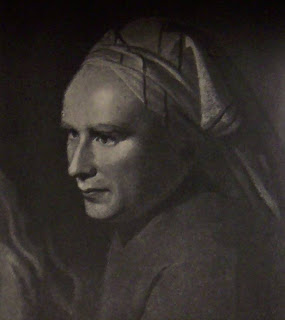 I have blogged about this series before, and this volume was similar to the ones I had read on John Knox and Robert Murray M'Cheyne. Cowper is best known for the hymns God moves in a mysterious way, O for a closer walk with God and There is a fountain filled with blood - but is also notable for his struggle with insanity and depression. He had a mental breakdown every ten years: in 1752, 1763 and 1773.
The Philippian Fragment by Calvin Miller
This book is a series of fictional letters from the second century. The author purports to be the pastor of the church at Philippi. There is a lot of pastoral wisdom here, though it gets rather silly at times.
The Flanders Panel by Arturo Pérez-Reverte
This was a rare re-reading. The Flanders Panel is a mystery novel about art and chess, and so it's right up my alley. It does, however, contain violence and sensuality, and so I am not recommending it here. One thing struck me as I read it again: not only is the painting in the story fictional, but it reflects an imaginative history of a non-existent country: the Duchy of Ostenburg, which is described as being somewhere between Luxembourg and Flanders. In fact, I only realised it was fictional when I tried to look it up on Wikipedia.
Women of the Old Testament by Abraham Kuyper
This was the first book published by Zondervan. It covers fifty women, including some fairly obscure ones such as the woman of Bahurim. Most of the devotions are fairly moralistic: in regards to the wife of Jeroboam, for example, Kuyper notes that what "the Scriptures intend to teach us by this episode" is that wives should not obey their husbands if they tell them to do evil.
Kuyper does make some use of biblical theology, though - in the chapter on Rebecca, he points out that in favouring Jacob over Esau, Rebecca is partly responsible for the enmity between Edom and Israel - an enmity that extends all the way down to Herod and Jesus.
And a number of the applications in this book are very perceptive. In discussing the Queen of Sheba, Kuyper suggests that
The Wisdom of Mr. Chesterton by Dave Armstrong and G. K. Chesterton, Theologian by Aidan NicholsThe Queen of Sheba was not much different from many of the young women of the higher classes among us today. They are eager to know everything.They have highly developed tastes... Had they lived in Solomon's day, they would certainly have made a trip to Jerusalem, just as they now travel to Paris and London, to Vienna and Berlin... Doubtless, they would have marveled in breath-taking bewonderment at the external beauty of the Temple at Jerusalem. But they forget one thing. They forget that a greater than Solomon is here. They forget that that greater One does not primarily ask them to appreciate the beauty of His word, but that he asks them for the surrender of their hearts... For that reason, these interesting and interested young women remain at the stage which the Queen of Sheba reached and go no farther. They come to Jerusalem. They are amazed and awe-struck. And they leave Jerusalem.

These two books were both published last year. I am reading them in preparation for a talk I am giving on Chesterton at St Joseph's Catholic Church, Chelsea on Thursday, 3rd September at 7:30pm. If you live in Melbourne, feel free to come along.
The Lost Symbol by Dan Brown
It always says something when the name of the author is much bigger than the title of the book. This is the third book in the Robert Langdon series, after The Da Vinci Code and Angels and Demons. Like the other two books, the front page of this novel contains a "Fact" section, this time asserting that "All rituals, science, artwork, and monuments in this novel are real." I don't know what "real" means in this context, but here is an example of a scientific statement in the book:
In 2001, in the hours following the horrifying events of September 11, the field of Noetic Science made a quantum leap forward. Four scientists discovered that as the frightened world came together and focused in shared grief on this single tragedy, the outputs of thirty-seven different Random Event Generators around the world suddenly became significantly less random.This quote, on the other hand, is probably fictional rather than scientific:
Katherine had created beautifully symmetrical ice crystals by sending loving thoughts to a glass of water as it froze.
The Masters by C. P. Snow
C. P. Snow was a scientist who became a writer. This novel is set in an imaginary Cambridge college, and seems to be set around the intrigues within the faculty as they choose a new Master.

Finished Recently:
The Two Cultures by C. P. Snow
Being both a scientist and a novelist, Snow was aware of the divide that often exists between those in the science and those in the humanities - these are the "two cultures" to which the title of this 1959 lecture refers. The point Snow argues is that they don't usually understand each other, and are mutually ignorant of each other's work. He notes that not many in the "traditional culture" (i.e. the humanities) can describe the Second Law of Thermodynamics, but asking them to do so is, in fact, the scientific equivalent of asking "Have you read a work of Shakespeare's?"
The edition of the book that I read had fifty pages of the original lecture, plus seventy pages of introduction. But such an introduction is probably appropriate given the lecture's influence - it is, for example, included in this list of the hundred most influential books since the war.
Travel with William Cowper by Paul Williams
 I have blogged about this series before, and this volume was similar to the ones I had read on John Knox and Robert Murray M'Cheyne. Cowper is best known for the hymns God moves in a mysterious way, O for a closer walk with God and There is a fountain filled with blood - but is also notable for his struggle with insanity and depression. He had a mental breakdown every ten years: in 1752, 1763 and 1773.
The Philippian Fragment by Calvin Miller
This book is a series of fictional letters from the second century. The author purports to be the pastor of the church at Philippi. There is a lot of pastoral wisdom here, though it gets rather silly at times.
The Flanders Panel by Arturo Pérez-Reverte
This was a rare re-reading. The Flanders Panel is a mystery novel about art and chess, and so it's right up my alley. It does, however, contain violence and sensuality, and so I am not recommending it here. One thing struck me as I read it again: not only is the painting in the story fictional, but it reflects an imaginative history of a non-existent country: the Duchy of Ostenburg, which is described as being somewhere between Luxembourg and Flanders. In fact, I only realised it was fictional when I tried to look it up on Wikipedia.
Tuesday, June 29, 2010
John's June Reading
Currently Reading:
Tomorrow, When the War Began by John Marsden
I somehow missed out on reading this when it first came out, but Luke recommended it to me, and now that the film is about to be released, it seemed like the perfect time to get into it. The storyline is intriguing, and the characters bemuse me.
Unfinished Tales by J. R. R. Tolkien
We watched all three LOTR films a couple of weeks ago, and that inspired me to reread this book. It fills in a number of the little details. For example, Unfinished Tales is the source of our knowledge about the Istari: along with Saruman the White, Gandalf the Grey and Radagast the Brown, there were two other Blue Wizards, making five in all.
Abraham Kuyper: God's Renaissance Man by James McGoldrick
More on Kuyper. The Religion in the Public Square colloquium is only a few weeks away, and I'm busy writing my paper on Kuyper that I'm going to present there.
The Wages of Spin by Carl Trueman
From the first few essays, this isn't quite as good as Minority Report, which I read last year, but it still seems worth reading.

Finished Recently:
Pajama School by Natalie Wickham
This book is an autobiographical memoir, and I enjoyed reading how the author had been taught and moulded by the Holy Spirit over the years. In this way it reminded me of Lauren Winner's Girl Meets God.
This book is not solely about homeschooling - instead, Natalie has a lot to say about her involvement in various ministries. This includes several chapters devoted to her work with the Adventures in Character program. As its very name implies, this program is about teaching children how God wants them to live - honouring their parents, telling the truth, showing gratefulness.
The problem with this approach is that it is not gospel-centred, gospel-focused and gospel-driven. Children of all ages and all backgrounds need to hear the gospel, again and again and again. After all, the gospel is the "power of God to salvation for everyone who believes" (Romans 1:16). And the gospel is not what God wants us to do, it is about what God has done for us.
There is also no substitute for teaching kids systematically from the Bible. Take, for example, this children's curriculum called Promises. One might expect it to be about keeping promises to others. In fact, it's about the promises that God has made to people. That's what children need to hear. Regardless of whether or not they are from Christian backgrounds, regardless of whether or not they are converted, sound teaching means drawing out from Scripture what God has done for us in Christ.
Sovereign by C. J. Sansom
This is the third book in the Shardlake series - detective novels featuring a hunchback lawyer in the time of Henry VIII. This one is set in 1541, when Henry was married to Catherine Howard. It's not quite as interesting as the first two in the series. The characters spend the book feeling cold and miserable, and so does the reader.
Deep Exegesis by Peter Leithart
I loved this book. It's one of the best books on understanding the Bible that I've read. Leithart goes through different aspects of understanding the biblical text, constantly coming back to John 9 in order to illustrate what he means.
Leithart starts off by arguing that the text of Scripture is important: we ought not view it as a husk to be stripped away and discarded in order to get at the kernel. He then suggests that texts add meaning to what has gone before. So, in John 9:14 we are told that Jesus had healed the blind man on the Sabbath day. This crucial piece of information had been withheld until now, and it colours all that goes before. Meaning emerges as we read through the chapter.
Leithart then proceeds to discuss poetic meanings (like John pausing to tell us what the name of the pool means in 9:7) and intertextual allusions (such as creation out of dust in John 9:6 and Genesis 2:7). He also looks at structure, and notes that the interrogation of the blind man's parents forms the hinge of a chiasm. Leithart concludes by asserting the Christ-centred nature of all sound interpretation.
At times Leithart seems to get bogged down by talking about people like Spinoza and Oedipus, but this is still an excellent book for those who read theology at a first-year seminary level.
Preaching that Speaks to Women by Alice Mathews
I aim to read at least one book on preaching every year, and two things in particular stand out in this one. In the first place, Mathews raises three questions that every preacher should ask: What does the text mean? Is it true? So what? In other words, preaching involves explaining, proving and applying. Secondly, Mathews has some helpful things to say about eschewing power. That is something I really need to remind myself of as a minister. Yet neither of these things have much to do with preaching to women in particular. I finished this book wondering how preaching to women is different to preaching to men. Indeed, the great need in the church today is not that preachers learn how to preach to women, but that they learn how to preach full stop.
Monday, May 24, 2010
John's May Reading
Currently Reading:
Brave New Family: G. K. Chesterton on Men and Women, Children, Sex, Divorce, Marriage and the Family
I am giving a talk on Chesterton at St Joseph's Catholic Church, Chelsea on Thursday, 2nd September at 7:30pm. This is a wonderful collection of pieces, recently compiled. This morning I read "The Library of the Nursery," where Chesterton argues that children do not really need books of Nonsense. "Sages and grey-haired philosophers," to be sure, "ought to sit up all night reading Alice in Wonderland," but
I have been thinking through the issue of common grace in preparation for my talk on Abraham Kuyper at the Religion in the Public Square colloquium, and I thought this would be an opportunity to finally have a go at reading this book. Much of what Schilder wrote on the subject of culture and grace is a response to Kuyper's ideas:
I've been greatly blessed in the past by reading Schilder's trilogy on the suffering and death of Christ. Those were rich meditations, but difficult to read - it literally took me years to get through the three books. So far, Christ and Culture seems to suffer from the same sort of lack of readability.
Passage by Connie Willis
I don't often re-read books, but this one is just so good. It's about a couple of researchers who manage to simulate near-death experiences. This is a gripping story, and Willis is most adept at getting the reader to identify with the main characters.
Reading the Old Testament by John Barton
As many readers will know, I am starting to specialise in the Old Testament in my reading and study, and this book provides a good introduction to the different types of approaches and "criticisms" out there. I have found it useful in writing the Wikipedia article on canonical criticism.

Finished Recently:
Three Views on the New Testament Use of the Old Testament
This was a difficult read, and it's hard to explain what are the three views in question. They revolve around fulfilment of Old Testament prophecies. For example, Matthew 2:15 indicates that certain events in Jesus' life "fulfilled what the Lord had said through the prophet: Out of Egypt I called my son." This is a quotation of Hosea 11:1. Now, as I understand them, Walter Kaiser would say that Hosea was revealed a truth about the Messiah, Darrell Bock would understand the passage as talking about God's Son, but that Jesus as well as Israel, fulfils that role, while Peter Enns would say that Hosea was not thinking about Christ at all, but since the whole of the Old Testament has Christ as the goal, it was reasonable of Matthew to make the connection.
This has been a burgeoning area of study in recent years, as witnessed by the massive Commentary on the New Testament Use of the Old Testament, which I often use in sermon preparation.
The Clown in the Belfry: Writings on Faith and Fiction by Frederick Buechner
Last time I blogged, I mentioned how I was reading Buechner's The Book of Bebb. I thought it would be appropriate to read some of his non-fiction at the same time. This is a collection of sermons and addresses. The title of the book comes from an anecdote about a certain Lyman Woodard who "stood on his head in the belfry with his feet toward heaven." That, says Buechner, "is a magical and magnificent and Mozartian thing to do."
Quitting Church: Why the Faithful are Fleeing and What to Do about It by Julia Duin
This book is about those who quit church, for such reasons as being hurt by a church, not being able to find good teaching, or not having churches take singleness seriously. Interestingly, one of the reasons covered is charismatics not being able to find a suitable church, since so many charismatic churches have, in recent years, moved away from exercising the extraordinary gifts.
Searching the Scriptures - A Feminist Introduction
The world of feminist hermeneutics is a desolate one, and I would not recommend venturing there without good reason. The essays in this book seem to be based on two premises: 1) the Bible is intensely patriarchal; 2) that's a bad thing. Still, the book wasn't quite as bad as I expected.
Brave New Family: G. K. Chesterton on Men and Women, Children, Sex, Divorce, Marriage and the Family
I am giving a talk on Chesterton at St Joseph's Catholic Church, Chelsea on Thursday, 2nd September at 7:30pm. This is a wonderful collection of pieces, recently compiled. This morning I read "The Library of the Nursery," where Chesterton argues that children do not really need books of Nonsense. "Sages and grey-haired philosophers," to be sure, "ought to sit up all night reading Alice in Wonderland," but
The child has no need of nonsense: to him the whole universe is nonsensical, in the noblest sense of that noble word. A tree is something top-heavy and fantastic, a donkey is as exciting as a dragon. All objects are seen through a great magnifying-glass; the daisy in the meadow is as large as a tree of the Hesperides, and the pebbles littered about a puddle will serve for the Islands of the Blest.Christ and Culture by Klaas Schilder
I have been thinking through the issue of common grace in preparation for my talk on Abraham Kuyper at the Religion in the Public Square colloquium, and I thought this would be an opportunity to finally have a go at reading this book. Much of what Schilder wrote on the subject of culture and grace is a response to Kuyper's ideas:
We are fog-bound. Even the followers of Dr. Abraham Kuyper are. For years and years they talked of nothing but “God’s honour in all spheres of life.” The more scholarly ones among them constantly repeated Kuyper’s adage concerning “sphere sovereignty.” Every “sphere” of “life” had its own “sovereignty. However; often they do no more than repeat this slogan. No wonder. For Abraham Kuyper himself could not clearly explain what exactly those “sovereigns” in all those “spheres” are. One single Sovereign—that we can accept and understand But as soon as one starts to speak about “sovereigns” in the plural, each of them in his own sphere, then things become vague.
I've been greatly blessed in the past by reading Schilder's trilogy on the suffering and death of Christ. Those were rich meditations, but difficult to read - it literally took me years to get through the three books. So far, Christ and Culture seems to suffer from the same sort of lack of readability.
Passage by Connie Willis
I don't often re-read books, but this one is just so good. It's about a couple of researchers who manage to simulate near-death experiences. This is a gripping story, and Willis is most adept at getting the reader to identify with the main characters.
Reading the Old Testament by John Barton
As many readers will know, I am starting to specialise in the Old Testament in my reading and study, and this book provides a good introduction to the different types of approaches and "criticisms" out there. I have found it useful in writing the Wikipedia article on canonical criticism.

Finished Recently:
Three Views on the New Testament Use of the Old Testament
This was a difficult read, and it's hard to explain what are the three views in question. They revolve around fulfilment of Old Testament prophecies. For example, Matthew 2:15 indicates that certain events in Jesus' life "fulfilled what the Lord had said through the prophet: Out of Egypt I called my son." This is a quotation of Hosea 11:1. Now, as I understand them, Walter Kaiser would say that Hosea was revealed a truth about the Messiah, Darrell Bock would understand the passage as talking about God's Son, but that Jesus as well as Israel, fulfils that role, while Peter Enns would say that Hosea was not thinking about Christ at all, but since the whole of the Old Testament has Christ as the goal, it was reasonable of Matthew to make the connection.
This has been a burgeoning area of study in recent years, as witnessed by the massive Commentary on the New Testament Use of the Old Testament, which I often use in sermon preparation.
The Clown in the Belfry: Writings on Faith and Fiction by Frederick Buechner
Last time I blogged, I mentioned how I was reading Buechner's The Book of Bebb. I thought it would be appropriate to read some of his non-fiction at the same time. This is a collection of sermons and addresses. The title of the book comes from an anecdote about a certain Lyman Woodard who "stood on his head in the belfry with his feet toward heaven." That, says Buechner, "is a magical and magnificent and Mozartian thing to do."
Quitting Church: Why the Faithful are Fleeing and What to Do about It by Julia Duin
This book is about those who quit church, for such reasons as being hurt by a church, not being able to find good teaching, or not having churches take singleness seriously. Interestingly, one of the reasons covered is charismatics not being able to find a suitable church, since so many charismatic churches have, in recent years, moved away from exercising the extraordinary gifts.
Searching the Scriptures - A Feminist Introduction
The world of feminist hermeneutics is a desolate one, and I would not recommend venturing there without good reason. The essays in this book seem to be based on two premises: 1) the Bible is intensely patriarchal; 2) that's a bad thing. Still, the book wasn't quite as bad as I expected.
Monday, April 12, 2010
Kara's March and April Reading
Finished:
A Girl at Government House, An English Girl's Reminiscences: "Below Stairs" in Colonial Australia, ed. by Helen Vellacott
Recently, I was talking with one of the ladies at church about Kansas and Victorian history. I gave her Pioneer Women; she gave me this. What a fun read it was! It's an edited version of a book published anonymously many years ago. Helen Vellacott found an old copy in a bookshop and liked the story so much that she researched until she found the name of the author. This edition has illustrations and photos of many of the people and places mentioned in the story. It's the memoir of a girl who left England for Australia in the 1890's, and ended up working in the kitchens of several prominent leaders of the day.
Pride and Predator by Sally S. Wright
Second in a series. Dorothy Sayers wannabe, Wright, gives us a story of a Scottish minister killed by bees. I didn't like this nearly as much as Publish and Perish. But that might not have so much to do with the book, as with the fact that I'm a minister's wife.
Changing Planes by Ursula Le Guin
This collection of short stories soon lost its attraction for me. What began as an intriguing idea (people stranded in airports visiting other "planes") soon flopped, as the stories began to look like anthropological studies. I've since been told that this probably wasn't the best Le Guin to start with.
Bobby Brewster's Ghost by H.E. Todd
Two reasons I took this took this from the shelf: I wanted to read a book that John had read as a child. And my littlest brother had just read it, and given me an enthusiastic report. It was a fun way to spend an afternoon.
Currently reading:
Reformed is not Enough by Douglas Wilson
The Federal Vision book. And I still don't see what the big deal is. I've found the discussion of living by faith in the chapter entitled "Reformation Bona Fides" particularly helpful. I'm still thinking on this: "systematic interpretations may be allowed to interpret what the Scriptures say...but they must never be allowed to replace what the Scriptures say. We can tell we have stumbled at this place when we disallow (for the sake of our systematic understanding) a phrase or statement that the Bible itself uses." (p.54) I'm afraid I've done that before.
The Dream of Scipio by Iain Pears
I'm halfway through and I still don't know what's going on. But somehow I feel compelled to finish.
Immortal Lovers: Elizabeth Barret and Robert Browning by Frances Winwar
John, Tony (my brother in law) and I were out walking the other day when our attention was drawn to a sign: Book sale, 100m. A little later, there was another: Book sale, 50m. By now, we were excited! This is one of the books I came home with. (John and Tony found several useful Bible commentaries)
Prodigal Press by Marvin Olasky
Not certain one of the major premises is entirely accurate. (Did the U.S. ever have any Christian reporting? Or was it simply that newspapers used the accepted phraseology of the day?) But still a very insightful study on journalism past and present, with a helpful discussion of the ethical issues at stake.
BookSneeze Review: Jane Austen by Peter Leithart
In this slim biography (only 175 pages), Peter Leithart endeavours to counter misconceptions of the "Divine Jane" and to reveal Austen as she was. He shows how her life was idealized in the 19th century, and compares letters quoted in older biographies with the originals. Leithart argues that Austen's satiric, sometimes cutting, sense of humour has been often downplayed or ignored. The Victorian Austen was "an Austen who could never even deign to notice bad breath, much less complain about it to her sister." (page 146)
He also comments on the current craze for all things Austen, labelling it "Janeia". He says that "Jane Austen is now what she never was in life, what what she would have been horrified to become--a literary celebrity." (back cover) Instead, he believes that she was a humble person: "She recognized her own smallness, and she achieved artistic greatness because she recognized her limitations and joyfully worked within them...." (page 153)
I've not read many biographies of Austen, so am not sure if Leithart is really saying anything new. But I found the book a concise, balanced introduction to her life, and a useful companion to Leithart's excellent commentary on Austen's novels, Miniatures and Morals.
Note: Originally, the book was written as part of the Cumberland Press Leaders in Action series, however, publication was delayed when the press went out of business last year. Thankfully, Thomas Nelson decided to print it as part of their Christian Encounters series. I was thrilled to receive a review copy from Booksneeze .
Saturday, March 13, 2010
John's March Reading
Currently Reading:
Intentional Disciplemaking: Cultivating Spiritual Maturity in the Local Church by Ron Bennett
I am reading this book as part of discussion group with my fellow PTC graduates.
Biblical Economics: A Commonsense Guide to Our Daily Bread by R. C. Sproul, Jr.
This is an informative book. Sproul is very critical of U.S. governmental policy, and accuses it of stealing, not so much through high taxation, but through currency devaluation and excessive borrowing. It's not quite as biblical as I would like: perhaps a better title would be Austrian Economics.
Reading Biblical Narrative by J. P. Fokkelman
This is one of the classics in the field. I find the recent trend towards literary approaches in biblical studies to be quite satisfying.
The Book of Bebb by Frederick Buechner
This volume consists of a quartet of novels, the first three of which I read about ten years ago. I bought this book recently, and decided I wanted to re-read them all before I got to the one I haven't read yet. They are about a so-called evangelist named Leo Bebb, who runs a mail-order ordination business. Buechner describes his physical appearance in the following terms:

Finished Recently:
Handbook of Church Discipline: A Right and Privilege of Every Church Member by Jay Adams
One of the unusual arguments in the book is that there is a difference between excommunication and "putting outside the fellowship". In the former, the offending party is still regarded as a brother, while in the latter situation, he is regarded as a "tax collector or sinner".
A Wizard of Earthsea by Ursula Le Guin
Another classic that for years I'd never got around to reading. Completely enchanting.
Visions & Voyages: The Story of Celtic Spirituality by Fay Sampson
This book's subtitle is a little misleading, as the book has much more to do with the history of Celtic Christianity than its "spirituality". But it contains a whole lot of great stories and fascinating characters.
Biffen's Millions and The Return of Jeeves by P. G. Wodehouse
These are both the U.S. titles. They were published in the U. K. under the titles Frozen Assets and Ring for Jeeves respectively. Light-hearted fun.
Intentional Disciplemaking: Cultivating Spiritual Maturity in the Local Church by Ron Bennett
I am reading this book as part of discussion group with my fellow PTC graduates.
Biblical Economics: A Commonsense Guide to Our Daily Bread by R. C. Sproul, Jr.
This is an informative book. Sproul is very critical of U.S. governmental policy, and accuses it of stealing, not so much through high taxation, but through currency devaluation and excessive borrowing. It's not quite as biblical as I would like: perhaps a better title would be Austrian Economics.
Reading Biblical Narrative by J. P. Fokkelman
This is one of the classics in the field. I find the recent trend towards literary approaches in biblical studies to be quite satisfying.
The Book of Bebb by Frederick Buechner
This volume consists of a quartet of novels, the first three of which I read about ten years ago. I bought this book recently, and decided I wanted to re-read them all before I got to the one I haven't read yet. They are about a so-called evangelist named Leo Bebb, who runs a mail-order ordination business. Buechner describes his physical appearance in the following terms:
A workable, Tweedledum mouth with the lines at the corners, the hinge marks, making an almost perfect H with the tight lips. A face plump but firm, pale but not sick pale. He was high-polish bald and had hardly a trace of facial hair, beard or eyebrows even. The eyes were jazzy and wide open and expectant, as if he'd just pulled a rabbit out of a hat or was waiting for me to.

Finished Recently:
Handbook of Church Discipline: A Right and Privilege of Every Church Member by Jay Adams
As the title suggests, this is a practical manual of the way in which biblical discipline should be carried out in the church. And as the subtitle indicates, the great theme of this book is that discipline is a blessing that we dare not withhold from God's people.
One of the unusual arguments in the book is that there is a difference between excommunication and "putting outside the fellowship". In the former, the offending party is still regarded as a brother, while in the latter situation, he is regarded as a "tax collector or sinner".
A Wizard of Earthsea by Ursula Le Guin
Another classic that for years I'd never got around to reading. Completely enchanting.
Visions & Voyages: The Story of Celtic Spirituality by Fay Sampson
This book's subtitle is a little misleading, as the book has much more to do with the history of Celtic Christianity than its "spirituality". But it contains a whole lot of great stories and fascinating characters.
Biffen's Millions and The Return of Jeeves by P. G. Wodehouse
These are both the U.S. titles. They were published in the U. K. under the titles Frozen Assets and Ring for Jeeves respectively. Light-hearted fun.
Subscribe to:
Posts (Atom)