Showing posts with label non-fiction. Show all posts

Sunday, April 19, 2020

Ten books that have influenced me the most

Someone asked me the other day which books have influenced me the most, and I thought for old times' sake I would write a blog post with a list.

Keep in mind that these are not necessarily the best books I've read; some of them happened to be in the right place at the right time of my life. I have restricted myself to theology books; there are fiction books that have also influenced me profoundly, but that influence is usually subtler.

I have arranged the books in order of author. Five of these books are written by Americans; the other authors include one Australian, one Canadian, one Dutchman, one Englishman, and one Scot. Three of these books are available as pdf downloads: I have put a link in their titles.

Robert Alter, The Art of Biblical Narrative (Basic Books, 1981)

Interestingly, the first book on this list is by a (non-Christian) Jew, and so "biblical" here means "Old Testament". Alter fundamentally misunderstands the Old Testament since he doesn't read it in the light of Jesus. And yet he has helped and encouraged me to read the text closely, discerning the importance of details, and asking why one word is used rather than another.

D. A. Carson, A Call To Spiritual Reformation: Priorities from Paul and His Prayers (Inter-Varsity Press, 1992)

This book, first published in 1992, was reissued in 2015 under the much better title, Praying with Paul: A Call To Spiritual Reformation. The book is actually an exposition of the prayers in Paul's epistles. This book transformed my prayer life (though not as thoroughly as I might wish) by challenging me regarding the things I pray for, and helping me to pray through passages of the Bible.

G. K. Chesterton, Orthodoxy (John Lane, 1908)

This is a whimsical account of how Chesterton became a Christian: "I am the man who with the utmost daring discovered what had been discovered before.... I did try to found a heresy of my own; and when I had put the last touches to it, I discovered that it was orthodoxy." This book gave me a vision of how grand orthodox Christian theology is: "There never was anything so perilous or so exciting as orthodoxy. It was sanity: and to be sane is more dramatic than to be mad."

Graeme Goldsworthy, Gospel and Kingdom (Paternoster Press, 1994)

There are many good books on how to read and understand the Old Testament, but this was the book that most clearly showed me how to read OT stories in the light of Christ. I had always been convinced of covenant as a unifying OT theme; this book encouraged me to place kingdom as a companion theme alongside it.

Douglas Jones and Douglas Wilson, Angels in the Architecture: A Protestant Vision for Middle Earth (Canon Press, 1998)

This book does for evangelical Protestantism what Chesterton's Orthodoxy does for catholic Christianity: provide a vision of how exciting believing the Bible and following Jesus can be. (In fact, while the authors call their approach "medieval Protestantism", Douglas Wilson has used the label "Chestertonian Calvinism" to describe his beliefs.) Needless to say, I caught the vision, and as a result this book is one of the clearest statements of my worldview, and the sort of things I wish to encourage in my home.

James B. Jordan, Through New Eyes: Developing a Biblical View of the World (Wolgemuth & Hyatt, 1988)

This book helped me to see how the Bible fit together: the connections between different passages, and how certain themes and motifs run right through God's Word. It also helped me to understand the created order in the light of Scripture.

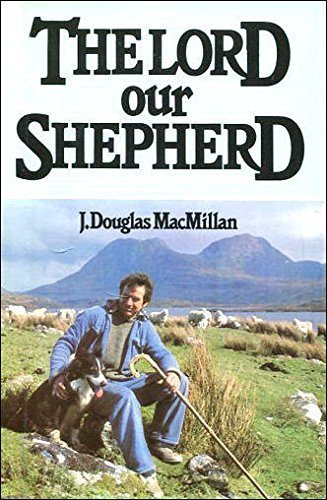
J. Douglas MacMillan, The Lord Our Shepherd (Bryntiron Press, 1983)

This exposition of Psalm 23 was one of the first theological books I read as a teenager, and it showed me how personal and pastoral biblical exposition can be. This is experiential Free Church piety at its warmest.

Vern Poythress, Philosophy, Science, and the Sovereignty of God (Presbyterian and Reformed, 1976)

It was Poythress who guided me from an interest in mathematics to an interest in theology. This book helped me get straight in my mind how everything fits together.

Klaas Schilder, Christ in his Suffering (Eerdmans 1938)

This is the first volume of a trilogy in which Schilder covers every aspect of Christ's Passion. I had the feeling while reading it that I was on holy ground. Schilder often breaks out into prayer and doxology.

R. C. Sproul, Jr., When You Rise Up: A Covenantal Approach to Homeschooling (P&R, 2004)

This was the book that convinced me of the value of homeschooling, and led me to adopt a perspective that sees homeschooling as first and foremost discipleship.

Concluding postscript:

Growing up in a Reformed Christian home, being a Calvinist was never going to be a problem. These books helped me work out the sort of Calvinism I wanted to pursue: a deeply biblical, warm, thoughtful and catholic Calvinism.

Monday, June 04, 2012

Reading the OED by Ammon Shea

I find the concept of this book slightly annoying. On the front cover of my edition is the boast, "I have read the OED so you don't have to." Is this meant as a dare? Because any word lover worth his salt isn't going to be satisfied with such a claim. How are we to know that the author has found the most interesting words?  I feel like going to the library right now and taking down Volume 1: A to Bazouki.

The book is the story of the author's reading through the massive Oxford English Dictionary in one year. The chapters are titled according to the letters of the alphabet and contain a smattering of the  words he discovered along the way. This brings me to my second criticism. Half the fun of the OED is the detailed histories of words. And all that is missing in this book. The definitions provided are sadly brief, and occasionally misleading. (At least Shea admits to this in his introduction.) The entry for Balaamite is particularly disappointing. It seems to be an attempt at humor at the expense of the Bible, and it's quite evident that Shea didn't bother to look at the story in any depth. But this was mild in comparison to the worldly-wise anti-marriage scoff tagged on to the definition for opsigamy.

These gripes aside, I still couldn't resist a book about reading books, and it was a fun read in the main.

Will I add any of the words I read about to my vocabulary? Probably not---well, maybe abluvion. I see that a lot.

Friday, December 30, 2011

Surprised by Oxford by Carolyn Weber

This is a fat book. So I initially expected it to be a memoir in need of a lot of pruning. Such is not the case. I thoroughly enjoyed it from beginning to end. It's a spiritual memoir in the style of Girl Meets God-- a story of a bookish person struggling with the big questions of life and ultimately coming to believe that Christ has the answers.

There are many things to like about this volume, from its structure around the Oxford academic year to the way Weber weaves quotations from various classics throughout her narrative. Most striking and helpful to me was her description of life as a new Christian in the midst of academia. Many of her friends thought she was crazy. Some even told her she had lost all academic credibility. Not only did she struggle with friends feeling betrayed, she also struggled to fit into “churchianity”. Things like finding the correct page for the Bible reading and singing in public seemed like almost insurmountable difficulties. She felt she could never catch up to those who had been steeped in the Bible and Christianity from youth. As one of the latter, I found the chapter “Church Going” a very helpful description of how a new Christian might feel coming to church for the first time.

One thing that surprised me about Weber's memoir was how little she mentions C.S. Lewis. Given that the book is set in Oxford, that was something I expected. But her road to faith in Christ was guided primarily through reading the Bible (all of it!) and conversations with Christians.

Surprised by Oxford is funny, articulate and thought-provoking. It's a title I'd read again, and will be recommending to others.


-Kara

Disclosure of Material Connection: I received this book free from the publisher through the BookSneeze®.com book review bloggers program. I was not required to write a positive review. The opinions I have expressed are my own. I am disclosing this in accordance with the Federal Trade Commission’s 16 CFR, Part 255 : “Guides Concerning the Use of Endorsements and Testimonials in Advertising.”

Tuesday, January 11, 2011

BookSneeze Review: Lee, A Life of Virtue by John Perry

I recently obtained an advance review copy of this book from Booksneeze. I was intrigued by this statement on the back cover: "Traitor. Divider. Defender of slavery. This damning portrayal of Robert E. Lee has persisted through 150 years of history books. And yet it has no basis in fact." Strong words, these. Yet I was puzzled as well, for this supposed pervasive portrayal of Lee was something I failed to identify with. To the contrary, every previous Civil War book I had read, both pro and anti-Southern, conveyed only admiration for General Lee. Had I somehow missed something? This could hardly be reason enough to write a new biography about a man who has already had numberless words written about his life. The editor's note helped me to understand the motivation for this new series about American Generals. Stephen Mansfield asserts that most that has been written about the lives of American military leaders falls into two opposing categories, hagiography and revisionist history (in which the subject is a "reviled symbol of societal ills"). He states that it is time for a balance portrayal of our leaders, one that gives honour where it is due, and yet does not gloss over human frailty. More than that, the intent of the series is to "help us learn the lessons they [these generals] have to teach". (p.x) In the author's introduction, Perry proposes to answer the questions "Who was the real Robert E. Lee, how did he become the man he was, and how is the genuine article different from the myth?"(p.xviii)

As I read the biography, I was most struck by the difficulty Lee faced in balancing his sense of duty to his country with his devotion to his family. During his more than 30 years of service in the U.S. Army, he experienced many lengthy separations from his wife and children. Some of the agony he felt comes out in some of the letters to his wife, Mary Anna Custis, which the author quotes at length. Perry also brings out the close connection that Mary Anna's family had to George Washington, whose memory was still fresh in many American minds during the early 1800's. Even at such an early date, there emerge strong hints of the popular mythology that was to grow around the first President of the United States.

Drawing heavily from personal letters and J.William Jones' biography of Lee, Perry concludes that "Lee was not an infallible commander. His recurring flaw was to assume his subordinates had the same energy, bravery, resolve, and sense of self-sacrifice he did and then plan accordingly. ... Yet, ... Lee was a great leader...because he never abandoned his personal standards, [and] never wavered from doing what he thought was right even in the face of inevitable, crushing, devastating consequences." (p. 226) I found the book easy to read, and think that Perry a fair job in accomplishing his stated goals in writing the book. However, I would have appreciated more detailed references, rather than the rather short bibliography given at the end.

Tuesday, November 30, 2010

Kara's Spring Reading

A Walk with Jane Austen by Lori Smith

A combination travel book and spiritual memoir, this book kept me interested even though I was occasionally annoyed by the author's retelling of her love-life dramas. (I should have guessed they were coming from the sub-title, which in the British edition is something about a "search for my own Mr. Darcy." Blegh.) Smith, a 20-something girl battling chronic illness, decides to travel to England and visit all the places connected with Jane Austen. In the process, she learns more about Austen, herself, and God.

A Wind in the Door by Madeleine L' Engle

How could I help but be intrigued by a first line like this: "There are dragons in the twins' vegetable garden..."?


Eating with Emperors
by Jake Smith

A collection of menus from various world leaders, from Queen Victoria to J.F.K., combined with recipes and historical trivia. Fun to read, but I don't think I'll try any of the recipes. Foie gras just isn't my kind of thing.

Around the World in 80 dinners
by Bill and Cheryl Jamison

A great idea for a book is hampered by the attempt to narrate from the point of view of two people. Some of the sentences are truly cringe-worthy. It's bogged down by too many details--did I really need to know exactly what went into the suitcases? And the worst thing about this combination food and travel book is that it didn't make me hungry.

An Acceptable Time by Madeleine L'Engle

The last in L'Engle's Time Quintet, it is interesting, but too long.

The Age of Kali
by William Dalrymple

Not your typical travel book. Dalrymple's tales of India are weird and heart-wrenching by turns. In this wide ranging collection of essays, he tackles the plight of widows (including an apparent modern occurrence of sati), and interviews terrorists, politicians and a cricket star. These are tales I will not soon forget.


On Rue Tatin and Tarte Tatin by Susan Loomis

Memoirs of an American food writer who moved to France, along with her husband and son, and started a cooking school. Each chapter concludes with a recipe or two. I loved these books! Loomis' rambling style is charming, and I found her observations on settling into another country and culture particularly insightful.

Amy's Bread
by Amy Scherber and Toy Kim Dupree

I'm a bread lover and a bread baker on the search for the perfect loaf. Something beautiful, crusty and full-flavoured. This book is helping me reach that goal, with lovely pictures and detailed instructions.

The Italian Baker
by Carol Field

Another good baking book, this one was especially helpful to me because of the sweet short pastry recipe, which was broken down into parts by weight. (making it easy to memorize)

Blessed are the Hungry: Meditations on the Lord's Supper by Peter Leithart

During the past year, I've been reading this as a devotional during the weeks preceding communion. This method works particularly well with this book, as each chapter is a stand-alone meditation on a single Bible passage. Leithart helped me gain a broader understanding of the sacrament, in particular the aspect of a joyful feast. Highly recommended.

Cat O' Nine Tales by Jeffrey Archer

I came to John one day, wanting to read a mystery but bemoaning the fact that I'd already read all the Sayers, Chesterton and Christie in the house. He gave me this collection of short, humorous stories to try. Enjoyable and unpredictable.

Tuesday, September 14, 2010

Kara's Winter Reading

I stopped reading for a while, because of sickness. Then we had company. Then we went on vacation. Lots of normal things in between. Here are a few comments on the books I've enjoyed since my last post.

Mudhouse Sabbath by Lauren Winner

A small book of meditations on things like candles, prayer, and weddings. Winner muses on how to celebrate God in a Christian way, after her conversion from orthodox Judaism.

A Wrinkle in Time
and A Swiftly Tilting Planet by Madeleine L'Engle

L'Engle is fast becoming my new favourite author. In both these books, I was immediately drawn in to the story by her compelling picture of homelife. She has a knack of writing about things that are so ubiquitous as to become unnoticed, i.e. the creak of a stairstep or the sound of a house when the refrigerator is off. These bits of the ordinary are what help me get into stories that might otherwise seem too outlandish.

Pajama School by Natalie Wickham

It's always fun reading books by friends. I am able to get a glimpse of another side of a person, through her writing. So because of this, I found this faith memoir hard to put down. However, the average person might not find it so engaging.

The Chase (A Long, Fatal Love Chase) by Louisa May Alcott

I expected this to be a bad book, and so was able to thoroughly enjoy it. It's one of those novels that would have been better left unpublished in an attic. It reads like a teenager's first effort, full of smudgy crayon characters, melodrama and with a plot guessable from the beginning. As long as you don't take it too seriously, it's great fun.

Monsoon Diary: Reveries and recipes from India by Shoba Narayan

This is my favourite sort of food book: half memoir, half cookbook. This gave me a taste of life in India, in more ways than one! I've added her recipe for Channa Masala to my regular repertoire.

Searching for God Knows What by Donald Miller

Not nearly so good as Blue Like Jazz. He lost me a few chapters in, probably right around the spot where he starts having an imaginary conversation with an angel. Or something. I would have preferred more talk about God, and less about people.

Turkish Cooking by Ghillie Besan

Full of tasty recipes. I tried hummus, menemen and spinach salad, among others.

Repairing the Ruins, the classical and Christian challenge to modern education. Edited by Douglas Wilson

A mixed bag of essays, focused on classical education in a private school setting. One of the best talked about how to teach mathematics in a Christian manner.

Honey for a Child's Heart
by Gladys Hunt

I read this while on vacation in Sydney. Hunt writes winsomely about the importance of reading aloud as a family, and gives many interesting book recommendations.

Psmith Journalist by P.G. Wodehouse

Note that the 'P' is silent. :) According to Wodehouse, New York City is full of people who read newspapers non-stop. There are also swarms of thugs with guns. Sometimes the two overlap. Not having been there myself, I have nothing to say on the matter.

Watership Down by Richard Adams

I was a bit skeptical of a novel featuring rabbits. Especially rabbits who see visions. However, I kept at it, and soon couldn't stop til I reached the beautiful conclusion. This is imaginative writing at its finest. I especially like the alternating chapters of rabbit mythology.

A Primer on Worship and Reformation by Douglas Wilson

I end up reading one of Wilson's books every month or so. He makes theology and Christian living beautiful. This is a very small book advocating a return to God honouring worship as an antidote for the ills of modern, man-centered evangelicalism. Highly recommended.

Gingerbread Baby by Jan Brett

I love this picture book: beautiful illustrations, not too long, and fun for adults as well.

Monday, April 12, 2010

Kara's March and April Reading

Finished:

A Girl at Government House, An English Girl's Reminiscences: "Below Stairs" in Colonial Australia, ed. by Helen Vellacott

Recently, I was talking with one of the ladies at church about Kansas and Victorian history. I gave her Pioneer Women; she gave me this. What a fun read it was! It's an edited version of a book published anonymously many years ago. Helen Vellacott found an old copy in a bookshop and liked the story so much that she researched until she found the name of the author. This edition has illustrations and photos of many of the people and places mentioned in the story. It's the memoir of a girl who left England for Australia in the 1890's, and ended up working in the kitchens of several prominent leaders of the day.

Pride and Predator by Sally S. Wright

Second in a series. Dorothy Sayers wannabe, Wright, gives us a story of a Scottish minister killed by bees. I didn't like this nearly as much as Publish and Perish. But that might not have so much to do with the book, as with the fact that I'm a minister's wife.

Changing Planes
by Ursula Le Guin

This collection of short stories soon lost its attraction for me. What began as an intriguing idea (people stranded in airports visiting other "planes") soon flopped, as the stories began to look like anthropological studies. I've since been told that this probably wasn't the best Le Guin to start with.

Bobby Brewster's Ghost by H.E. Todd

Two reasons I took this took this from the shelf: I wanted to read a book that John had read as a child. And my littlest brother had just read it, and given me an enthusiastic report. It was a fun way to spend an afternoon.

Currently reading:

Reformed is not Enough by Douglas Wilson

The Federal Vision book. And I still don't see what the big deal is. I've found the discussion of living by faith in the chapter entitled "Reformation Bona Fides" particularly helpful. I'm still thinking on this: "systematic interpretations may be allowed to interpret what the Scriptures say...but they must never be allowed to replace what the Scriptures say. We can tell we have stumbled at this place when we disallow (for the sake of our systematic understanding) a phrase or statement that the Bible itself uses." (p.54) I'm afraid I've done that before.

The Dream of Scipio by Iain Pears

I'm halfway through and I still don't know what's going on. But somehow I feel compelled to finish.

Immortal Lovers: Elizabeth Barret and Robert Browning by Frances Winwar

John, Tony (my brother in law) and I were out walking the other day when our attention was drawn to a sign: Book sale, 100m. A little later, there was another: Book sale, 50m. By now, we were excited! This is one of the books I came home with. (John and Tony found several useful Bible commentaries)

Prodigal Press by Marvin Olasky

Not certain one of the major premises is entirely accurate. (Did the U.S. ever have any Christian reporting? Or was it simply that newspapers used the accepted phraseology of the day?) But still a very insightful study on journalism past and present, with a helpful discussion of the ethical issues at stake.

BookSneeze Review: Jane Austen by Peter Leithart

In this slim biography (only 175 pages), Peter Leithart endeavours to counter misconceptions of the "Divine Jane" and to reveal Austen as she was. He shows how her life was idealized in the 19th century, and compares letters quoted in older biographies with the originals. Leithart argues that Austen's satiric, sometimes cutting, sense of humour has been often downplayed or ignored. The Victorian Austen was "an Austen who could never even deign to notice bad breath, much less complain about it to her sister." (page 146)

He also comments on the current craze for all things Austen, labelling it "Janeia". He says that "Jane Austen is now what she never was in life, what what she would have been horrified to become--a literary celebrity." (back cover) Instead, he believes that she was a humble person: "She recognized her own smallness, and she achieved artistic greatness because she recognized her limitations and joyfully worked within them...." (page 153)

I've not read many biographies of Austen, so am not sure if Leithart is really saying anything new. But I found the book a concise, balanced introduction to her life, and a useful companion to Leithart's excellent commentary on Austen's novels, Miniatures and Morals.

Note: Originally, the book was written as part of the Cumberland Press Leaders in Action series, however, publication was delayed when the press went out of business last year. Thankfully, Thomas Nelson decided to print it as part of their Christian Encounters series. I was thrilled to receive a review copy from Booksneeze .

Tuesday, February 23, 2010

Kara's February Reading

Blue Like Jazz by Don Miller

Girl Meets God by Lauren Winner

Two spiritual autobiographies that made me think. The first is by a man who ended up a Christian, in spite of early experiences of Fundamentalism gone bad. He challenged my ideas of what evangelism and friendship with non-Christians should look like. This must be the sort of book Kafka was talking about: "I think we ought to read only books that bite and sting us. If the book we are reading doesn't shake us awake like a blow to the skull, why bother reading it in the first place?" (read the rest of the quote here)

I loved Girl Meets God. In it, Lauren Winner tells of her conversion from Orthodox Judaism to Christianity. She brings home to me the truth that following Christ costs something. I appreciated how her story is neither glib nor saccharine, and how she doesn't gloss over the many intellectual struggles she had along the way. I hope to read more from this author--Mudhouse Sabbath next, I think.

For the Children's Sake by Susan Schaeffer Macaulay

I've been vaguely familiar with aspects of Charlotte Mason's education theory for some time now. Things like reading aloud, narration, and nature study. But I've wanted to learn more. So I was happy to find this introduction to her thought on our shelves. I found myself arguing with the book as I read, and even after finishing I don't really understand the ideas behind the method.

In spite of this, I did glean some helpful things. I appreciate the admonition to parents to not act like they have all the answers, and to make sure that the children know that their parents are under authority, too. Of particular interest to me was the idea that I can help children now, even if I don't have any of my own. Being willing to listen, perhaps reading aloud to a child in the neighbourhood.

Chocolat by Joanne Harris

I was deeply disappointed in this book. After seeing and liking the movie, I expected a book that revelled in the delights of chocolate while exploring themes of prejudice, friendship and hypocrisy in religion. Well, I got the themes. But not much chocolate. Which is almost infuriating, considering the book's title! I was left feeling a bit depressed and confused. I couldn't identify with any of the characters at any meaningful level. Who was I supposed to feel for? The snooty, prejudiced townspeople? The rootless chocolatier who dabbles in witchcraft? The fanatical priest with a hidden past? The story seems to be saying that life is better when we throw away prejudice, help those in need, and do what we like (never mind what society thinks). Maybe there's some element of truth buried somewhere in there. But when I reached the end of the book, I was thinking of the emptiness and futility of life without Christ.


The Flying Inn by G.K. Chesterton

Great for someone who already likes Chesterton, but not for anyone else. Too episodic. He's not really much of a novelist. Lots of speeches, poetry and story all mixed up together.

The "Song of Right and Wrong" is often quoted at our house.

Friday, February 05, 2010

Kara's January Reading

These will all be in the category of Finished Recently, as the month is already over...

The Paideia of God by Douglas Wilson

This is a collection of essays on classical education. Not the sort of book to spend a lot of time mulling over, rather, more bits to fit into my growing concept of Biblical education. Best essays: Title, and one discussing whether the Reformed faith and Classical education are necessary counterparts.

One Flesh: A Practical Guide to Honeymoon Sex and Beyond by Amelia and Greg Clarke

This is the first book I've finished from my list of books to read in 2010. As I read it, I asked myself whether I would recommend it to someone preparing for marriage. I've concluded that it wouldn't be my first choice. There's too much detail in some places (i.e. discussion of various positions-- possibly overwhelming, I think, for newly-weds) and not enough detail in others. I would have liked to have seen more discussion of what to expect on the wedding night, and how to prepare. Anyway, for pre-wedding reading about love making, I would recommend selected chapters from Ed Wheat's Intended for Pleasure.

My friend Sherrin has written a more detailed review of this book here.

Asterix the Legionary

My first Asterix comic. And so far my favourite. I knew I had to read these when John started making little jokes, and then remarking that they were "from Asterix". Since the "Legionary", I've also read Asterix in Spain, Asterix in Britain and Asterix the Gaul. I like the funny names and wordplay.

The Worst Case Scenario Survival Handbook: Travel by Joshua Piven and David Borgenicht

If I ever need to trail a pickpocket, survive a trip down a waterfall, get out of a locked car trunk, or cross a piranha-infested river, I'll know what to do!

Paddington Marches On by Michael Bond

Not the best, but still fun revisiting a childhood favourite.

Soul Survivor: How My Faith Survived the Church by Philip Yancey

Another from the 2010 list. This one made me think. At times, there was so much food for thought that I had to put it down for a few days, just so I could digest it all. Often I found myself getting uncomfortable; other times I began having a spirited debate with some of the ideas promoted by authors Yancey discusses.

In the past year, I've learned not to be afraid to ask hard questions. Soul Survivor gave me many to ponder: What sorts of civil disobedience are Biblical? In what ways has the Church alienated people unnecessarily? What does it mean to love sinners? And many more. This is an important book for me, one I'm still thinking about weeks after I finished reading it.

Saturday, December 12, 2009

John's December Reading

Currently Reading:

My Soul Magnifies the Lord: Meditations on the meaning of Christmas by Martyn Lloyd-Jones

This book consists of four expositions on the Magnificat - Mary's song in Luke 1. I've been reading one chapter in each Sunday of Advent.


Powers by John B. Olson

I received a copy of this as part of LibraryThing's Early Reviewers scheme. Stay tuned for the full-length review coming soon.

Science and Christianity: Four Views edited by Richard F. Carlson

This book is published by IVP, in apparent imitation of Zondervan's Counterpoints series. I'm reading this in preparation for a workshop I will be running at PYV Summer Camp on "Can I be a Christian and believe in science?"

The Faithful Sayings in the Pastoral Letters by George W. Knight III

I am in the middle of a series on the faithful sayings in the Aspendale evening services. Five times in the pastoral epistles (I & II Timothy and Titus), Paul says "this is a faithful [or, "trustworthy"] saying. The first one in particular is a great Christmas text: "This is a faithful saying and worthy of all acceptance, that Christ Jesus came into the world to save sinners, of whom I am chief," (1 Timothy 1:15)

Finished Recently:

The Path to Rome by Hilaire Belloc

Rather than being the story of Belloc's conversion (he was a life-long Catholic), this is a travel book, written in 1902. Read the book online here.

Belloc undertakes to walk from Toul (in France) to Rome. He does end up cheating, however - twice he catches a train, and twice he hitches a ride on a cart. Here is a Google map of Belloc's trip - I would love to follow in his footsteps one day. By car, of course - it's a 22 hour trip:


Dark Fire by C. J. Sansom

This is the sequel to Dissolution, which I read on my honeymoon. There are currently four books in this series of historical mystery novels, featuring a hunchbacked lawyer as the hero. "Dark Fire" is another name for Greek fire, the long-lost formula of which, in the book, has apparently been rediscovered.

Bound for Glory: A Practical Handbook for Raising a Victorious Family by R. C. Sproul, Jr.

This is the fourth and probably the best book I've read by R. C. Sproul Jr. This has some challenging things to say about Christian family life - and although I have read a fair bit on this subject, I found much in the book that I hadn't thought about before. For example, Sproul argues that a church Session can function as a sort of "court of appeal" for a wife (p. 93):
My wife and I have a dispute. We are not agreeing. I am asking her to do something she doesn't think we ought to be doing. So she goes to court. The court she comes to however, is the church, not the state. That I am not Jesus is painfully apparent. But here, in a church that is willing to exercise discipline and recognizes its rightful calling in these circumstances, she has protection.
The Old Church Book by Robin Langley Summer

This is coffee table book of churches in North America. Although it was a bit frustrating that not all the churches discussed were pictured, I was particularly interested in what it said about revival styles (Greek, Gothic, Romanesque), since they are also to be found in Australia. So, for example, when Kara and I visited Hobart last month, we saw St George's, Battery Point (left) whose pillars are clearly Greek revival. Notice the (architectural!) similarities to the United First Parish Church, Quincy, Massachusetts (right) which is one of the churches featured in the book:


Saturday, November 07, 2009

John's November Reading

Currently Reading:

Face to Face: Meditations on Friendship and Hospitality by Steve Wilkins

I'm reading this with Kara. We're both keen on extending our hospitality over the next few years, and hopefully this book will help us to think theologically about the subject.

Preach or Perish, edited by Donald Howard

I like usually to have a book of preaching on the go, and this is a good one. Most of the contributions come from Sydney Anglicans, but there are a few Presbyterians in it as well.

1 Samuel by David Jobling

I've been preaching through 1 Samuel in our evening services at Aspendale, and this book has stimulated my thinking. Jobling provides us a good example of where liberal assumptions can take us in biblical interpretation - if the Bible is only a fallible record of human experience, there is no reason to believe it contains an accurate portrayal of God. Sure enough, Jobling believes that 1 Samuel portrays God as childish and irrational (p. 84). Despite this outrageous statement, Jobling raises some important questions that do need to be answered. For example, why does David remain king despite all his sin, whereas Saul is rejected after a trifling offence? Jobling puts it down to God's inconsistency, but there is a better explanation: the LORD made an everlasting covenant with David (2 Samuel 23:5), whereas he did not make one with Saul. All in all, this is a potentially dangerous book, and not one I can recommend to readers of this blog.

Teaching the Trivium: Christian Homeschooling in a Classical Style by Harvey and Laurie Bluedorn

This is a classic example of a controversial book. It has 29 reviews on Amazon: 17 give it five stars, while 10 give it 1 star.

Kara and I are planning to homeschool our kids, and this book looks like it's going to be very useful in helping us plan a curriculum.


Finished Recently:

Aussie Pilgrim's Progress by Kel Richards

This book is almost better than the original. I avoided getting Richards' Aussie Bible, but at just $3 at Borders, this was too good to pass up. I read it to Kara, and had the dual pleasure of sharing a devotional book with her, and teaching her the Australian language.

At a couple of places, Richards makes some positive theological adjustments to Bunyan's text. In Hopeful's account of his conversion, Richards includes an explanation of the Big Swap. In the original version, Hopeful has to wait for Christ to reveal himself to him, which he does in a special revelation to his soul, but in Richards' version, all Hopeful (or "Trusty", as he is now) has to do is pray a short simple prayer and really mean it, and he has made the first step on a lifelong journey.

The Sermon on the Mount: An Evangelical Exposition of Matthew 5-7 by Don Carson

I've just finished preaching through these chapters in our morning services, and this book was quite helpful. Not Carson's best, (that would be A Call to Spiritual Reformation) but still very good.

The Deceiver by Frederick Forsyth

Another spy novel, better than the one I read last month.

Miniatures and Morals: The Christian Novels of Jane Austen by Peter Leithart

As the subtitle suggests, this book doesn't just look at Jane Austen from a Christian perspective - it actually argues that her novels are Christian. It has be admitted, however, that we don't know much about Austen's personal faith.

I must confess, I did not read all of this book - just the introductory chapter, and the two chapters on the two Jane Austen books I have read: Pride and Prejudice and Emma. But Leithart has encouraged me to keep on reading through the Austen corpus. Next stop: Mansfield Park, which Leithart claims is Austen's most theological novel.

Monday, October 19, 2009

Kara's September/October Reading

Currently Reading:

The Paradoxes of Mr. Pond by G. K. Chesterton

Mr. Pond is an odd character. He's always saying things that just don't make sense...at first. Take this from the first story, "The Three Horsemen of Apocalypse" : "... Grock failed because his soldiers obeyed him. Of course, if ONE of his soldiers had obeyed him, it wouldn't have been so bad. But when TWO of his soldiers obeyed him--why, really, the poor old devil had no chance."

And then there were the two doctors who "came to agree so completely that one of them naturally murdered the other..."

I'm enjoying this book. :)

Her Father's Daughter by Gene Stratton Porter

I've only just begun this title, but expect it will be an enjoyable, if somewhat flowery read. Porter's interest in birds and plants again comes to the fore in this story of a young girl living on the outskirts of 1920's Los Angeles.

Recently Finished:

The Radical Reformission: Reaching Out Without Selling Out by Mark Driscoll

This book took me a while to finish, simply because I found it hard to get past Driscoll's tone. I found it both overly familiar--this diminished after the first chapter or so-- and times abrasive. However, now that I've made it to the end, I find myself wanting to read it again. There are many things he says about evangelism and culture that make me uncomfortable. But this is a good thing, because I am forced to ask myself "why?".

One thing in this book that I appreciate is the emphasis on evangelism through hospitality. This is an area I would like to grow in. Here are a few other things I've been thinking over:

"The way to avoid sin is not to avoid sinners but to stick close to Jesus." (p. 40)

"As long as Christians fail to repent of self-righteousness, we will continue to speak of evengelism in terms such as outreach, which implies we will not embrace lost people but will keep them at least an arm's length away." (p. 78)

"Jesus told us that the kingdom will be filled with joy, and so we make it a habit to take God very seriously and everything else very lightly." (p. 187)

My husband has written a review which covers the contents of this book more in depth.

The Daughter of Time by Josephine Tey

A mark of a good book of historical fiction is that it makes you want to read some real history. Even better if a bit of mystery is in the mix. This book fits the bill. It's a criminal investigation held hundred of years after the suspect(s) and victims are dead. On trial: Richard III.

Overall a great read, even though I was quite irritated at some historical revisionism regarding the Covenanters. Seems a bit much to marginalise them as simply political radicals, none of whom actually died for their faith.


From the Holy Mountain by William Dalrymple

A travel book in which Dalrymple retraces the steps of John Moschos, a 6th century monk who traversed Byzantium in its declining years, and then wrote a book called the Spiritual Meadow . I suppose what I liked best about the Holy Mountain was how I could learn ancient and modern history simultaneously. I was fascinated by the accounts of many strange sects, such as the Stylites, ascetics who lived on top of pillars. This book gave me a greater understanding of the difficulties that Christians face in the Middle East, and of the complexity of the issues behind conflict in the Holy Land.

Lincoln's Dreams by Connie Willis

One of the most intense books I've read. Probably wasn't a good idea to pick this up right after finishing Fahrenheit 451! Lincoln's Dreams is the story of a young researcher who meets a girl who is having very strange dreams. He soon concludes that they are not actually her dreams, but the dreams of Robert E. Lee, somehow transferred across the years (an idea I found quite disturbing). He sets out to help her, and soon finds himself in a bit of a predicament. There is a twist to this story that in retrospect I should have picked up on sooner. A very strange story.

Tuesday, July 28, 2009

Dusting off the shelves...

Blogging has been the furthest thing from my mind in recent months. Not too surprising, as those months involved two very life-changing events: marriage and an international move. But as the two-month anniversary of my wedding approaches, I feel the urge to once again toss a few words of my own into the blogosphere.

Currently Reading:

Primeval Saints by James Jordan

This is a study of some of the men and women in the book of Genesis. Since John and I are currently reading through Genesis, this book caught my eye. I was further intrigued by this sentence in the introduction: "From the pagan point of view, Abram did not act honorably when he told Sarai to tell Pharaoh that she was his sister and not his wife. Many Christians have faulted him for this, but as we shall see, he was acting in faith to preserve God's kingdom. And God vindicated him. "
I have yet to find out why he says this...

The Complete Stories of Dorothy Sayers

I was thrilled to find this on John's shelf! I loved the Lord Peter short stories, and had been disappointed that none of Sayers' other short stories were available in libraries near Wichita. Now I'm zipping through the 300 pages of adventure that I missed. Some of the stories send a shiver down my spine. Others make me feel like the top of my head is coming off. Not sure what that means. But perhaps others who've experienced the sensation will understand!

For a Glory and a Covering by Douglas Wilson

John is reading this to me. It's a bit more theological in tone than Wilson's other books on marriage. He does repeat many things he has said elsewhere, but those things are worth repeating.

June 6, 2009

Finished Recently:

Sketches of Home by Suzanne Clark

Ever since I read Tremendous Trifles by Chesterton, I've wanted to find more essays that appreciate the small things in life. This book is chockful. Honest, poetic, and unsentimental, it chronicles the life of Mrs. Clark from the early days of her marriage til her children reach the brink of adulthood. Mixed in are occasional reminiscences of her own childhood.

In John's home state of Tasmania

Black and Tan by Douglas Wilson

It's been years since I read anything about the War Between the States. But I've had a few questions posed to me recently, so I decided it might be time to revisit the period. I found this collection of essays to be a helpful and balanced discussion of the theological issues surrounding the war. Good mind-stretching stuff.

84 Charing Cross Road by Helene Hanff

John recommended this to me way back when, but for some reason I procrastinated. Once I had it in my hands, though, I couldn't put it down. It's the collected correspondence of a booklover and a London bookshop and tells the story of the friendships that developed over twenty years. The sequel, Duchess of Bloomsbury, was included in the same volume. It's the diary of the author's trip to London, after the successful publication of 84 Charing Cross Road. Wryly humourous, it brought back good memories of my own travels, and made me want to go back to see the places I missed.

Cold Comfort Farm by Stella Gibbons

I can summarize this book in one word: Weird. But enjoyably so. I could feel the author laughing at me as I finished the final paragraphs.


It feels so good to settle down into the rhythm of a new normal. My life is quite different in many ways, but books are a comforting constant!

Sunday, March 01, 2009

A Story of Answered Prayer

For as long as I can remember, I have desired to be a wife and mother. I distinctly remember the day my grandfather asked me the perennial question, “what do you want to be when you grown up?”. I made him guess, and after suggesting an enormous list of occupations, ranging from gynecologist to zookeeper, he gave up. “What do you want?” “To be a mommy”, I replied. That, to me, was the greatest aspiration a girl could have. I knew my mother was pretty special, and I wanted to be just like her. This was when I was about twelve years old. That desire never left me. But as my high school graduation neared, I began to have doubts as to its validity. I again had opportunity to answer the perennial question. But this time, I found that my answer would be countered with, “Yes, but what do you really want?” And I began to wonder if I was supposed to have some other goal in life. So I turned to my music—piano, viola, and theory. But I soon reached the end of my musical goals, and felt at a loss.

That was the beginning of my time in God’s school of contentment and humility. My first lesson was realizing that much of my life had been spent in the pursuit of selfish pleasure. As God changed my heart, I began to find joy and fulfillment in serving others, and especially my own family. During this time, I began to realize I had bought into many unbiblical preconceptions of what womanly fulfillment meant. I’d grown up hearing about the rebellious feminist, and found to my horror, that I was one myself. This was hard to swallow, and I began to spend time reading my Bible to find out what God had to say about His plan for me. I found that I didn’t have to leave my home to do important work. The simple task of washing the dishes grew in my estimation, as I learned that this, too, was serving God. The next lesson was the most humbling yet. I realized that I had placed my desire for marriage above God. I had allowed the lack of one thing to make life seem hopeless. When I read the story of King Ahab’s lust for Naboth’s vineyard, I saw myself.

By God’s grace, I began to get my priorities straight. And thus began some of the hardest years of my life. For, as my relationship with God grew, and as I sought His will for me as a woman, I became completely convinced that marriage was a good thing. And more than that, that it was His will for me. On the one hand, this was freeing. Now I knew what I should prepare for. On the other hand, it was discouraging, for the years passed by without a prospect in sight. It was tempting to despair.

In the summer of 2008, I became increasingly burdened to pray for marriage for myself, as well as for my single girlfriends. So much so, that for the first time, I voiced that desire in public at a ladies’ prayer meeting at my church. This was a significant step; over the years I’d become cynically silent on the subject, feeling I’d heard enough pat answers. I felt immediately rebuked for my assumptions, as several ladies began to encourage and pray for me. Something one of them said in her prayer prompted me to take a fresh look at God’s Word, and what it said about godly men. I began to surrender many of my preconceptions of how things should be. In retrospect, I see this as key preparation in order for me to be receptive to the idea of long-distance courtship.

Also that summer, I participated in a young ladies’ Bible study on prayer, at which many helpful conversations on the subject of marriage were held. I also read and reviewed Candice Watter’s book, “Get Married.”

By August, I felt that I had come to the absolute end of myself. I had studied what God had to say about marriage and godly womanhood. I had prepared to the best of my ability. My lifeline became the prayer of faith. I took comfort in Jesus' parable of the importunate widow, grasping the promise that God would hear my prayers.

In September, one of my dearest friends began courting. And for the first time, I felt no jealousy, simply joy. Joy that God was doing great things. I thought those great things were for my friend. Turns out they were—but, in the biggest surprise of my life, I found God was working on my behalf, as well.

October 3rd began as a normal, sunny Friday. As I waited for my family to gather for morning devotions, I began the routine check of my e-mail on my sister’s laptop computer. There was a Facebook message from John Dekker, someone I vaguely knew through blogging. The first line was all I could see: “I feel a bit awkward sending this…” And as I clicked on the message, my first thought was, “Oh, no! What did I say?” For I distinctly remembered John’s precision with words; one of our very first blogging exchanges involved me having to explain ambiguities in my writing. I was not expecting what I saw next: “pursue friendship….contemplate marriage…”. My jaw dropped. It was all I could manage to hand the computer to my mom and say, “read this”.

I was completely shocked. For, all my thought and prayers about marriage notwithstanding, I had never once thought of John as a prospect. He had similar interests in literature, yes. But he lived on the other side of the world! I really knew next to nothing about him. He was simply a name in cyberspace.

But I immediately knew that I was interested. The reason was this: I had been praying a very specific prayer that week. I had prayed that God would prompt whoever he had for me as a husband to show some initiative in beginning a relationship. There were secondary reasons for my interest: John’s taste in literature, his evident sense of humour and his work as a minister. But these were dwarfed by this one apparent answer to prayer.

The first test of whether it truly was God’s answer was my father’s response. I knew if my dad said “no”, it was a closed door. And I fully expected him to refuse. I knew he was not at all keen on the idea of internet relationships. So when my dad decided to write to John, I was both surprised and scared. A reserved person by nature, I like my life to be certain and safe. The outcome of this situation was definitely uncertain, and it did not feel safe at all. The two weeks Daddy spent writing to John felt like the longest of my life. I was still in shock, and my days became one long prayer. Prayer simply that God would make His will clear. Because, now that the opportunity had come, I didn’t know what I wanted. The decision was too big. Yes. No. Yes. No. My wishes changed daily, even hourly. So when my mom came to me on Saturday, October 18 and told me she and daddy were happy for me to pursue friendship with John, I felt relief and happiness that the first answer had come.

Now for a timeline of our courtship:

October 19, 2008. John and I begin corresponding via e-mail. I feel completely out of my depth. It is a struggle to overcome my feelings of vulnerability, and to be completely honest. I discover that I didn’t trust God as much as I thought I did, and grow in faith.

November 17, 2008, my birthday. I am no longer fearful. By now we have discussed many foundational beliefs, and I begin to feel a growing interest in this man.

December 2008. I realize it is nearly impossible to remain emotionally detached. By the second week of the month, I surprise myself by falling in love. My prayers change at this point. I don’t understand my feelings, and ask God to give us both direction, and that if it is His will for us to marry, John would propose when he visits.

January 20, 2009. It is an answer to prayer that when we finally meet in person, it doesn’t take long for us to feel comfortable together. There are no surprises: John is the same in person as he was long-distance. After spending 3 days together, I felt as if we’d been friends for years.

January 24, 2009, Saturday morning. John makes me the happiest girl in the world, when he asks me to be his wife. Eight long years of prayer are brought to fruition.

That’s our story. I’m still in awe of it all. God has blessed me far above what I asked or even imagined. There are so many things I love and admire about John. He challenges my thinking-- this even from our very first blog discussion. He is a spiritual leader. We have had the blessing of studying several books of the Bible together. He is a teacher—I learn something new, nearly every time we talk. He is considerate of others. This was demonstrated in how he was careful to spend time with each person in my family when he visited. He is deliberate and intentional in his actions. I saw this continually throughout our courtship, and was often amazed at his forward thinking. He is patient. He always waited until I was comfortable before beginning a new stage in the relationship. (e.g. moving from e-mail to instant messaging) He can talk to strangers. This is a skill I greatly admire, as it is an area I struggle with. He had ample opportunity to demonstrate it, as I introduced him to many of my friends and church family during his visit to Wichita. He is discreet. He makes me laugh! And most of all, he points me to Christ.

“Now unto him that is able to do exceeding abundantly above all that we ask or think, according to the power that worketh in us, Unto him be glory in the church by Christ Jesus throughout all ages, world without end. Amen.” Ephesians 3:20-21

Saturday, February 14, 2009

Our Story...

...and why I love the author of this blog.

My name is John Dekker. On the evening Tuesday January 20, I met Kara for the first time. Three and a half days later, on Saturday morning, I asked her to be my wife, and she accepted. How did these events come about, you may ask?

Internet relationships have been around for a while now, and in the last couple of years blog relationships seem to have taken off. I'm personally aware of Mike and Christine (read their story here), Adrian and Susan (read their story here) and Aaron and Jessica.

Well, I came across Biblio-File, and I liked what I saw. I came to it from Lydia's blog. I knew Lydia through Susan, whom I knew through Sherrin, whom I knew in real life.

Throughout 2008, I spent some time rethinking my approach to marriage. Possibly influenced by Debbie Maken's Getting Serious About Getting Married, I began to think about becoming more proactive about finding a wife. I also started to rethink what things were important to me in a future spouse. One of these was that I decided I was looking for a girl who wanted to get married – not merely one who thought she might want to get married someday.

And that's something I saw in Kara. She was happy to publicly state her belief that “desire for marriage is God-given and that intentional prayer and preparation are not wasted efforts.” She also quoted approvingly Jackie Kennedy's maxim, “I want to take such good care of my husband that whatever he is doing, he can do it better, because he has me.”

But most of all, I noticed that Kara shared my love of books. We had so many favourite authors in common: P. G. Wodehouse (which showed that she had a sense of humour), G. K. Chesterton (which showed that she wasn't afraid to draw on other theological traditions) and Douglas Wilson (which showed that she wouldn't be put off by my Federal Vision sympathies.)

And one of my most favourite books, Angels in the Architecture, appealed to her also. It's a book that I have, on occasions, given to people to explain what I am on about. It is one of the clearest statements of my worldview, and the sort of things I wish to encourage in my home. The fact that Kara rated the book with five stars on Facebook, told me that we had much in common.

Well, it does seem that one can find out a lot about an individual by reading his or her blog. This may particularly be the case with a book blog like Biblio-File. And I'm more convinced than ever that a person's books say a lot about them.

I don't think I had any explicit evidence that Kara was Reformed in her theology, but I certainly got that vibe. Similarly, I had the feeling from reading her blog that Kara wanted kids, which was really important to me also.

So, we had common interests, common theology, and from the photos I had seen her blog and facebook (we had become facebook friends almost a year earlier) I thought she was attractive. At that particular moment in time, that was enough. So I told her that I had been admiring her for some time, and would like very much to get to know her better. I asked her if I could cultivate a friendship with her in order to prayerfully contemplate the possibility of marriage.

I hardly expected her to be interested. Internet courtships are not for everyone. Neither is getting married to a pastor. Neither is moving to Australia. I am the minister of Aspendale Presbyterian Church in the south-eastern suburbs of Melbourne, and expect to stay here for several years. I knew I would be asking Kara to leave friends and family behind.

I wasn't particularly surprised when I got an email back from Kara's father. What thrilled me most was that I was still in with a chance. Mike thanked me for my interest in his daughter, and said that he would like to correspond with me first. This process took two weeks, at the end of which he gave me permission to write to Kara.

The courtship process has been a wonderful one. It lasted right on three months. Perhaps a timeline would help: (these are the Australian dates!)

20th October – I send my first email to Kara. We quickly begin to cover some important ground theologically, as well as sharing our personal histories.

12th November – we begin to talk seriously about marriage, and about the possibility of marrying each other. We realize that we have similar perspectives and expectations.

14th November – a significant moment for me: Kara asks me how I feel that she could help me in my ministry. I realize that I'd made a good choice, and we talk about companionship, hospitality and what being a pastor's wife might entail.

19th November – we start chatting online. It was so helpful to wait until we had sorted through the serious philosophical issues before we started on this. It didn't take long before we both felt really comfortable with each other.

28th November – I ask Kara if I can come and visit, and tell her that now would be a good time to break off the relationship if she thought it wasn't going to continue. But she seemed more than happy to meet me.

8th December – we start reading through Isaiah together, a chapter a day, emailing our thoughts to each other. This has been such a blessing to both of us.

20th January – we meet face to face, at Wichita airport.

24th January – after talking with her Dad in the early hours of the morning and receiving his permission, I propose to Kara at about 10am, and she immediately accepts.

So – why do I love this girl? She's kind, intelligent, feminine and loving. She's full of discretion, wit, wisdom and courage. She has lovely eyes and a beautiful smile. And she admires, respects and loves me herself. Why wouldn't I want to spend the rest of my life with her?

Finally, I need to emphasize that we are still getting to know each other, and I feel like I know Kara so much better than I did when I asked her to marry me. And I could swear she's becoming more beautiful every day as well.

Soli Deo Gloria!

Saturday, September 20, 2008

Thoughts on Get Married by Candice Watters, Part 2

Read Part One

The rest of Get Married can be summed up in three imperatives: “Live like you’re planning to marry”, “You need a network”, and “Pray boldly”.

It is easy to slide through our single years thinking there is all the time in the world. But, as Mrs. Watters points out, how you live now deeply effects your future: “To suggest that regardless of how you live, God will bring the right man along when the time is right if marriage is His will, is at best naïve, and at worst presumptuous….Women must do all they can to prepare. Then we can trust God for the rest, knowing we’ve been faithful to do our part.” (p. 71,77)

She lists four hindrances to good opportunities for marriage that women need to be aware of: procrastinating, aiming too high, hyperindependence, and avoiding risk.

Procrastinating

God designed us with a prime time for marrying and having babies. That may be controversial but it is indisputable: Our biology, fertility, sexuality, energy, and beauty all reinforce that we have a window of opportunity to form a family well. This is not to say that if you are past a certain age, God can't bless you, but there is a season when some things--especially children--are more likely. Tragically, in our current culture, many women don't realize it until their window starts to close. (p. 134)

Aiming Too High

“We’ve lost our perspective of what a reasonable opportunity for marriage is….We may think what we want is a male version of us, but that’s not what God designed men to be. …I’m not saying you should lower your expectations; I am saying you should realign them.” (p. 136, 137)


This point has prompted me to take a fresh look about what God has to say in His word regarding the qualities a good man should exhibit. I realize that my expectations have been shaped more by the culture around me than by the Bible.

Hyperindependence

Even women who deeply desire marriage find themselves pouring themselves into their life as a single woman with little thought or planning for their future as a married one. They're hard at work on their careers and financial goals--their "Plan B" as many call it--just in case Plan A is delayed or never happens. It's understandable, and in our culture, praised, to make the most of your singleness. The problem is that Plan A requires moving toward oneness--interdependence--with another person in marriage. Plan B finds you becoming increasingly independent so you don't need another person. It's easy to see how actively investing in B could undermine A. (p.139)

This is something I’ve had to seriously consider as I choose how to spend my time.

Avoiding Risk
"It's tempting to wait until there is no risk, until there is no chance you could be hurt. Or hurt again. Your fears are real, but you can't let them have the last word. To live like you are planning to marry is risky because love is risky." (p.141)

“Living like you’re planning to marry means intentionally resisting these cultural traps and instead cultivating community, stewardship, and purity—the elements of Christian discipleship that can best help you recognize and embrace opportunities.”(p.141)

I found much food for thought in chapter five, “You need a network”. I’d never considered the idea of formal mentoring. Yet it makes sense to ask for help from those who are older and wiser. “If what you’re after is a strong, healthy marriage relationship, strong healthy relationships within your Christian community are the best way to get there.” (p. 90) If I make any big changes in my life because of this book, most likely they will be in this area.

The book concludes with a chapter devoted to what I am learning is one of God’s greatest gifts: prayer. The simple act of prayer is a powerful reminder to me that I am not in control. It focuses my thoughts on Another’s power and Another’s purposes. God is the source of all that I have—even my faith. I was reminded in this chapter of my great need for faith in prayer. And as we ask in faith, Mrs. Watters gives a timely warning to remember what it is we’re asking for: “Asking God to help you find a mate is asking Him to take you from a place of single focus to one that will require selflessness. Far from being the answer to all your dreams and fantasies, marriage will be a crucible for making you more like Christ.” (p. 152)

It is exciting to look forward to God’s work: “Imagine in the midst of our postmarriage culture, small countercultures springing up where marriage is honored, men are respectfully motivated, women are cherished, mentors are working on your behalf, purity is esteemed; in short where everyone is striving for the set-apart life Paul described in Thessalonians 3:11-4:8.”(p.150)

If you wonder whether it’s right to desire marriage, read this book. If you’re a single woman, wondering if waiting is the only thing you can do, read this book. If you’re actively preparing for marriage, but losing hope as you see nothing on the horizon, read this book.

You’ll be encouraged.